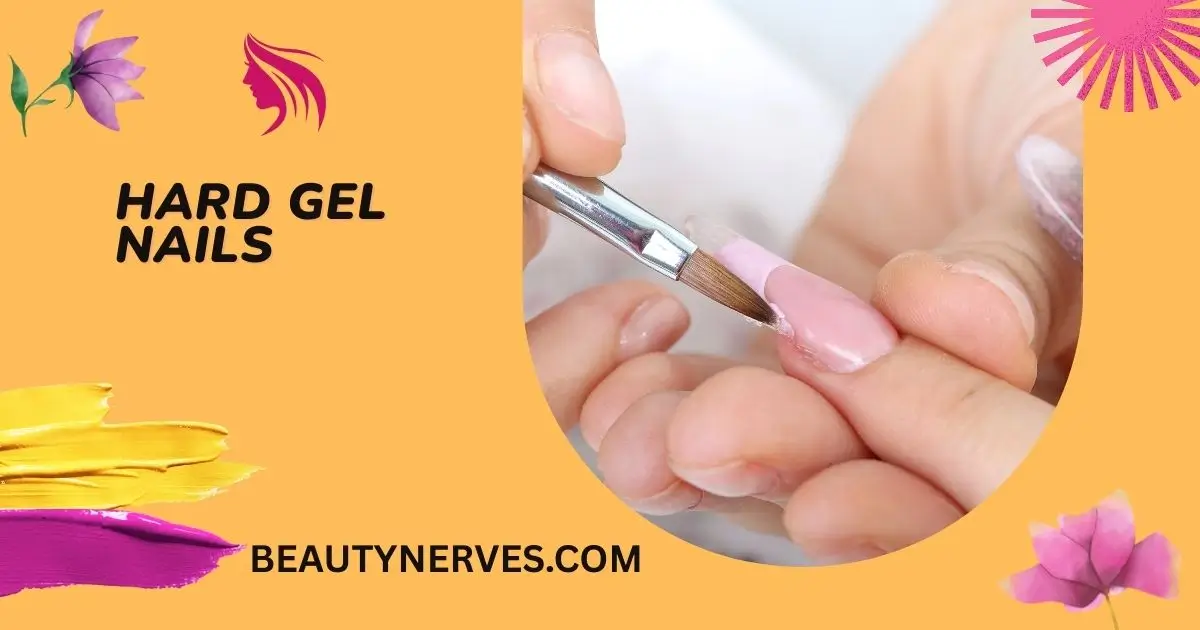
Hard gel nails are a popular choice for anyone who wants stronger, longer, and more structured nails. Unlike regular gel polish, hard gel can build the nail, create extensions, and provide a smooth base for everything from French tips to chrome designs.
What Are Hard Gel Nails?
Hard gel nails are artificial nail enhancements made from a thick gel that cures under a UV or LED lamp. They can be applied over natural nails as an overlay or used to create additional length and shape.
Hard gel starts as a workable gel and becomes hard after curing. Because traditional hard gel is usually file-off rather than soak-off, removal needs more care than ordinary gel polish.
If you are learning about nail enhancements for the first time, our Nails Guide and Nail Types Guide are useful starting points.
Table of Contents
How Do Hard Gel Nails Work?
Hard gel is applied in controlled layers and cured under a compatible lamp after each required application stage. Once cured, the product creates a strong structure that can be shaped and refined.
A typical appointment includes nail preparation, gel application, curing, filing, shaping, and finishing. The technician can then add color or nail art on top of the finished structure.
Hard Gel Nails vs. Gel Polish
Hard gel and gel polish may both need a curing lamp, but they serve different purposes. Hard gel builds structure, while gel polish mainly provides color and a glossy finish.
| Feature | Hard Gel | Gel Polish |
|---|---|---|
| Main purpose | Structure and strength | Color |
| Adds length | Yes | No |
| Texture | Thick | Thin |
| Sculptable | Yes | Limited |
| Traditional removal | Filing | Soaking |
| Nail art | Excellent | Excellent |
For more information about gel products, explore the Gel Nails Guide or learn how to apply gel nail polish.
Hard Gel Nails vs. Acrylic Nails
Hard gel and acrylic nails can both create extensions, overlays, and different nail shapes. The main difference is how the products are formed and cured.
Acrylic uses a liquid and powder system that hardens in the air, while hard gel uses a gel that cures under a lamp. If you are comparing options, read What Are Acrylic Nails and learn more about How to Do Acrylic Nails.
| Feature | Hard Gel | Acrylic |
|---|---|---|
| Curing | UV or LED lamp | Air drying |
| Product | Gel | Liquid and powder |
| Extensions | Yes | Yes |
| Overlay | Yes | Yes |
| Removal | Usually filed | Usually soaked |
| Odor | Usually lower | Often stronger |
Hard Gel Overlay Nails
Hard gel overlay nails add a layer of structure over the natural nail without necessarily creating significant extra length. This can give natural nails a smoother, stronger appearance.
Overlays are useful for people who like their existing nail length but want more support. See our Overlay Nails Guide to learn more about this type of enhancement.
Hard Gel Nails With Nail Tips
Hard gel can be combined with nail tips to create additional length before the gel is applied and shaped. The result can be customized into almond, square, coffin, oval, or other popular shapes.
The process normally involves preparing the natural nail, applying the extension, blending or shaping it, and then building the hard gel structure. Our Nail Tips Guide covers nail extension options in more detail.
How to Apply Hard Gel Nails
Applying hard gel nails requires careful preparation, controlled product application, and correct curing. Small mistakes can affect how well the enhancement stays attached and how healthy the natural nail remains.
1. Prepare the Natural Nail
The nails are cleaned and shaped before the enhancement is applied. The surface should be prepared according to the instructions for the specific product.
Avoid aggressive filing because excessive filing can thin the natural nail.
2. Apply the Hard Gel
The technician applies the gel in suitable layers and builds the desired structure. The product should stay on the nail rather than spreading onto the surrounding skin.
3. Cure the Gel
Each required layer is cured using the recommended lamp and curing time. Correct curing is important because improperly cured gel can increase the risk of skin exposure to uncured product.
4. Shape the Nail
After curing, the nail is filed and refined. This is where the final length, thickness, apex, sidewalls, and shape are created.
5. Add Color and Design
The finished structure can be left natural or covered with compatible gel color and nail art. French tips, chrome, glitter, cat-eye effects, and seasonal designs all work well with hard gel.
Are Hard Gel Nails Safe?
Hard gel nails can be used safely when products are applied and cured correctly, but artificial nail services are not completely risk-free. Poor preparation, aggressive filing, repeated removal, or contact with uncured products can cause problems.
The American Academy of Dermatology notes that artificial nail services can contribute to brittle, thin, or damaged nails and recommends giving natural nails breaks between services when possible. Its guide to reducing artificial nail damage also recommends choosing salons carefully and avoiding aggressive cuticle treatment.
Uncured acrylate-containing products can also cause allergic sensitization in some people. If you develop persistent itching, redness, swelling, or a rash around your nails after using gel products, stop using the suspected product and seek medical advice.
How Long Do Hard Gel Nails Last?
Hard gel nails can remain in place for several weeks, but the exact time varies from person to person. Natural nail growth, application quality, nail length, lifestyle, and aftercare all affect how long they look good.
As the natural nail grows, a visible gap develops near the cuticle. Regular maintenance can keep the structure balanced and reduce problems caused by excessive growth or lifting.
If you are comparing them with acrylic, see How Long Do Acrylic Nails Last.
How to Remove Hard Gel Nails
Traditional hard gel is usually removed by carefully filing the product down rather than soaking it in acetone. The goal is to remove the enhancement without unnecessarily filing the natural nail underneath.
Do not peel, bite, pry, or scrape hard gel from the nail. If the enhancement is lifting or damaged, professional removal can help reduce the chance of pulling away layers of the natural nail.
Gel polish has a different removal process, so see How to Remove Gel Nail Polish if you are dealing with soak-off gel rather than hard gel.
Hard Gel French Tip Nails
Hard gel creates a smooth, structured surface that works well for French tip designs. Classic white tips are popular, but colored and modern versions can create a very different look.
Try Red French Tip Nails, Blue French Tip Nails, Pink French Tip Nails, Purple French Tip Nails, or Green French Tip Nails.
For a softer transition between the base and tip, explore Ombre French Nails.
Hard Gel Chrome Nails
Chrome finishes add a reflective effect to hard gel and can turn a simple manicure into a bold statement. Chrome also works well as an accent on French tips or minimalist designs.
Popular options include Pink Chrome Nails, Black Chrome Nails, Red Chrome Nails, Blue Chrome Nails, and White Chrome Nails.
Cat-Eye Hard Gel Nails
Cat-eye nails use magnetic particles to create a bright line or glowing effect across the nail. The effect can look different depending on the base color, magnet position, and direction of the light.
For inspiration, explore Cat-Eye Nail Colors and Cat-Eye Nails. These effects can also be combined with French tips, chrome accents, and neutral bases.
Neutral Hard Gel Nail Colors
Neutral shades are a simple choice when you want hard gel nails that work for everyday wear. Popular options include nude, beige, soft pink, cream, milky white, and light brown.
For more color inspiration, visit the Neutral Nail Colors guide. Neutral shades also provide a clean base for minimalist art and subtle French tips.
Seasonal Hard Gel Nail Designs
Hard gel gives you a strong base for holiday and seasonal nail art. You can change the design while keeping the same underlying nail structure.
For spring, try Easter Nails. For other occasions, explore Halloween Nails, Thanksgiving Nails, Christmas Nails, Gingerbread Nails, and January Nails.
How to Care for Hard Gel Nails
Good aftercare helps your manicure stay neat while reducing unnecessary stress on the natural nail. Simple habits can also make lifting, cracking, and breakage less likely.
Hard Gel Nail Care Checklist
- Keep nails clean and dry.
- Moisturize hands and cuticles regularly.
- Wear gloves when using household chemicals.
- Do not use your nails as tools.
- Do not pick at lifting gel.
- Avoid aggressive filing.
- Schedule maintenance before severe lifting develops.
- Have damaged product repaired or removed professionally.
- Check your natural nails between services.
The American Academy of Dermatology recommends moisturizing nails and cuticles and avoiding picking at gel products. It also advises people to take breaks from artificial nail services when needed.
Common Hard Gel Nail Mistakes
The most common problems usually come from poor preparation, incorrect curing, aggressive filing, or improper removal. Avoiding these mistakes can make the service safer and help protect the natural nail.
Applying Gel to the Skin
Uncured gel should not repeatedly touch the surrounding skin. Skin contact with some nail enhancement chemicals can contribute to sensitization.
Over-Filing the Natural Nail
The natural nail should not be aggressively filed during preparation or removal. Too much filing can leave the nail thin and fragile.
Picking Off Lifting Gel
Pulling off lifting product can take layers of the natural nail with it. Have lifting checked and repaired instead.
Ignoring Nail Problems
Do not use hard gel to hide pain, swelling, discoloration, infection, or unexplained nail changes. Covering damaged nails can make existing problems worse.
Hard Gel Nails Pros and Cons
Hard gel offers strong structure and many design options, but it also requires proper application and removal. Understanding both sides can help you decide whether the system fits your nail routine.
| Pros | Cons |
|---|---|
| Adds structure | Requires careful removal |
| Can add length | Over-filing can damage nails |
| Smooth nail surface | Needs regular maintenance |
| Works with many designs | Uncured gel can cause sensitization |
| Good for overlays | Requires correct curing |
| Many shape options | Professional application is often useful |
Final Tips for Healthy Hard Gel Nails
Hard gel can look beautiful while still requiring careful nail care and maintenance. The safest routine starts with good preparation and continues through proper removal.
Choose a qualified technician, use the correct curing system, keep uncured product away from skin, and never peel off the enhancement. If your natural nails become weak, painful, or unusually discolored, take a break and seek professional advice.
Hard Gel Nails: Are They Worth It?
Hard gel nails are a flexible option for overlays, extensions, and detailed nail art when applied and removed correctly. They can create everything from short neutral manicures to long French, chrome, cat-eye, and seasonal designs.
The key is not simply choosing the enhancement, but maintaining the health of the natural nail underneath it.
Frequently Asked Questions
What are hard gel nails?
Hard gel nails are structured nail enhancements made from gel that cures under a UV or LED lamp. They can strengthen natural nails, create overlays, and add length.
Is hard gel the same as gel polish?
No. Hard gel creates structure and can add length, while gel polish mainly provides color and shine over the nail or an existing enhancement.
Can hard gel nails be soaked off?
Traditional hard gel generally cannot be removed by soaking in acetone. It usually needs to be carefully filed down by someone familiar with the product.
Should hard gel touch the skin?
No. Uncured hard gel should be kept away from the surrounding skin because some ingredients can cause skin sensitization after repeated exposure.
Why do hard gel nails lift?
Lifting can result from poor nail preparation, product touching the skin, incorrect curing, moisture, impact, natural nail growth, or application problems.
When should hard gel nails be removed?
Hard gel should be maintained or removed when it becomes significantly grown out, damaged, lifted, or uncomfortable. Professional removal can help protect the natural nail.