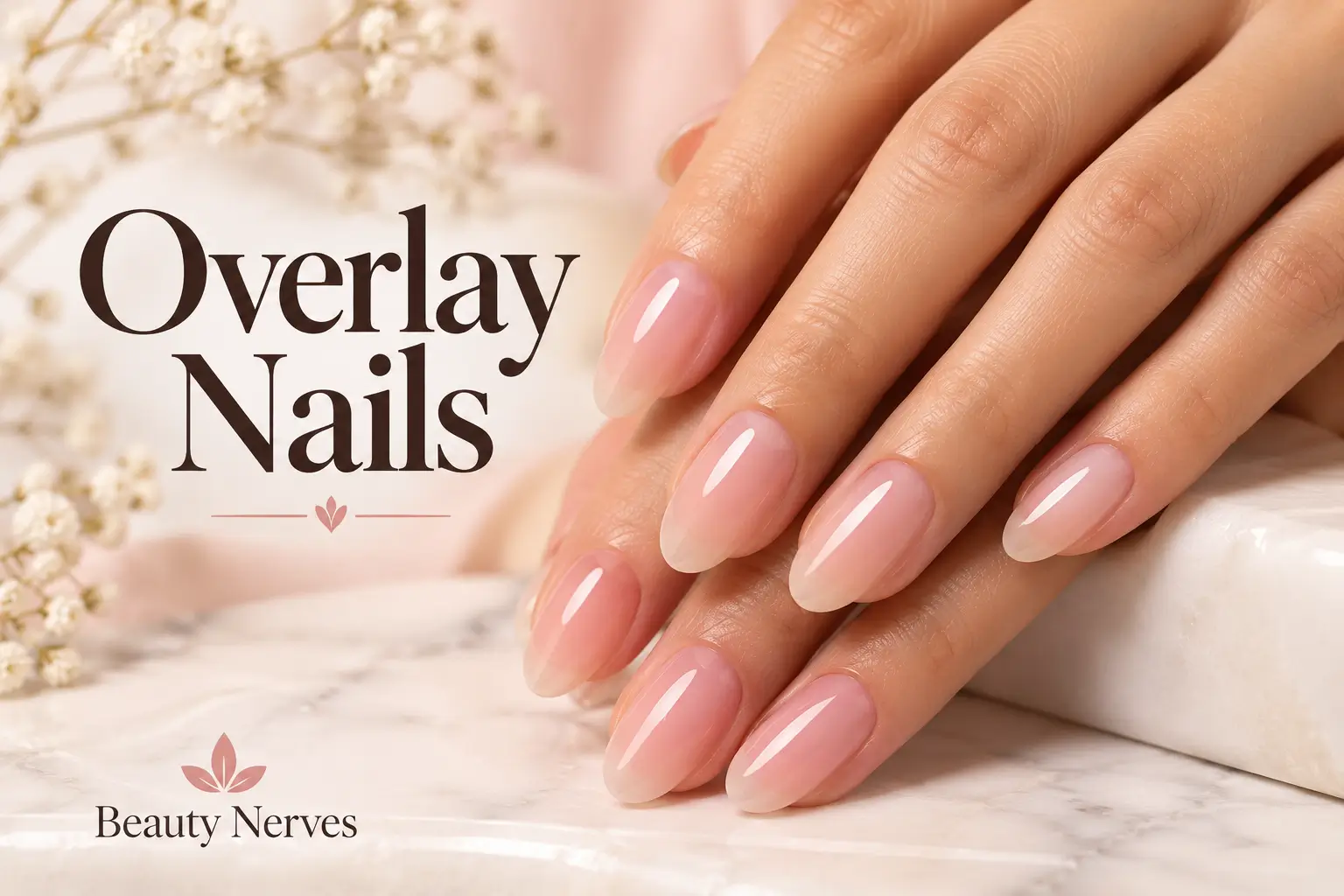
Overlay nails are a popular manicure choice for people who want stronger-looking natural nails without adding artificial length. They create a smooth, polished finish and can help protect natural nails from everyday wear when applied and maintained correctly.
From gel nail overlays to BIAB and acrylic nail overlays, several options are available to suit different nail types and preferences. Understanding their differences, benefits, and maintenance needs can help you choose the right overlay for your natural nails.
If you want to explore other manicure options, visit our complete nail care and nail design guide for more information about nail styles, finishes, and maintenance.
Table of Contents
What Are Overlay Nails?
Overlay nails are protective coatings applied directly to natural nails to improve their appearance and add structure without extending their length. They can be made from gel, builder gel, BIAB, acrylic, or other nail enhancement products.
Unlike nail extensions, overlays work with your existing nail length. They can create a smooth surface, support length retention by reducing some everyday breakage, and provide a base for colors and nail art.
Understanding the different types of nails and nail enhancements can help you choose the right manicure for your natural nails and personal style.
Key Takeaways
Overlay nails can be a practical option for people who prefer natural-length nails with a polished finish. The right product, gentle application, and safe removal are essential for maintaining healthy natural nails.
- Purpose: Reinforce and improve the appearance of natural nails without adding artificial length.
- Popular types: Gel nail overlay, builder gel, BIAB overlay, hard gel, and acrylic nail overlay.
- Main benefit: May help reduce bending and breakage when applied correctly.
- Maintenance: Often needed every two to four weeks, depending on nail growth and product type.
- Removal: Depends on the product, with some systems soaking off and others requiring careful filing.
- Main risk: Aggressive filing, peeling, and poor application can damage natural nails.
Overlay Nails at a Glance
Overlay nails offer a range of finishes and maintenance requirements depending on the product used. The following table summarizes their common features to help you understand what to expect before booking a manicure.
| Feature | Details |
|---|---|
| Best for | People who prefer their natural nail length |
| Added length | No, not by design |
| Common products | Gel, builder gel, BIAB, acrylic, hard gel |
| Application time | Often around 45–90 minutes |
| Maintenance | Commonly every 2–4 weeks |
| Available finishes | Natural, glossy, matte, French, glitter, and nail art |
| Main drawback | Requires careful maintenance and removal |
| Skill level | Professional application is recommended, especially for beginners |
These estimates vary by salon, nail condition, product brand, and design complexity.
What Is the Difference Between Overlay Nails and Nail Extensions?
Overlay nails reinforce the natural nail, while nail extensions add artificial length using tips or sculpted forms. Both can create attractive manicures, but they serve different purposes.
| Feature | Overlay Nails | Nail Extensions |
|---|---|---|
| Natural nail length | Maintains existing length | Adds length |
| Main purpose | Reinforcement and finish | Length and shape |
| Appearance | Often natural-looking | Natural or dramatic |
| Application | Product goes over the natural nail | Product builds or attaches an extension |
| Maintenance | Depends on growth and product condition | Requires maintenance as extensions grow out |
| Best suited for | People who like shorter natural nails | People who want longer nails |
An overlay covers and reinforces; an extension lengthens. Overlays can still be shaped into round, square, oval, squoval, or almond styles when the natural nail has enough length.
Types of Overlay Nails
Different overlay products offer different levels of flexibility, hardness, and structure. Choosing the right type depends on your nail condition, preferred appearance, and willingness to maintain the manicure.
1. Gel Nail Overlay
A gel nail overlay uses a gel product applied directly to the natural nail and cured under a compatible UV or LED lamp. It is a popular choice for people who want a smooth, glossy finish.
Benefits:
- Creates a neat, polished appearance.
- Works well with simple colors and nail art.
- Some formulas offer a flexible finish.
Drawbacks:
- Requires the correct curing lamp and application method.
- Repeated manicures or incorrect removal can contribute to brittle, peeling nails.
- Uncured gel should not touch the surrounding skin because some ingredients can cause allergic reactions.
For more information about gel application, finishes, and maintenance, explore our complete guide to gel nails.
2. BIAB Overlay
A BIAB overlay uses Builder in a Bottle, a type of builder gel designed to add structure to natural nails. It is often chosen for natural-looking manicures in pink, nude, sheer, or milky shades.
Benefits:
- Creates a smooth, fuller-looking nail.
- Can provide support for flexible natural nails.
- Works well for understated everyday manicures.
Drawbacks:
- Not every formula suits every nail type.
- Removal methods differ between products.
- Incorrect application or maintenance can damage the natural nail.
3. Acrylic Nail Overlay
An acrylic nail overlay uses a combination of liquid monomer and acrylic powder to form a hard coating over the natural nail. It is suitable for people who prefer a firmer, structured finish.
Benefits:
- Creates a durable surface.
- Can be shaped and decorated in many ways.
- Provides a firm coating without requiring artificial length.
Drawbacks:
- Excessive filing can thin the natural nail.
- Some people experience irritation or allergic reactions.
- Professional maintenance and careful removal are important.
If you want to learn more about acrylic application, maintenance, and removal, read our detailed guide to acrylic nails.
If you want to understand the process before choosing an acrylic overlay, read our guide on how to do acrylic nails step by step. It explains the application process and techniques used to create a neat finish.
4. Builder Gel Nails
Builder gel nails use a thicker gel formula to add structure and shape to natural nails. Depending on the product, builder gel may be available in a bottle or a pot.
Benefits:
- Helps create a more even nail surface.
- Can add support without extensions.
- Available in clear and tinted formulas.
Drawbacks:
- Requires correct curing.
- Some formulas need professional filing for removal.
- Thick or poorly applied product can create an uncomfortable or uneven finish.
5. Hard Gel Overlay
A hard gel overlay creates a firm, structured coating over the natural nail. Unlike many soft-gel products, hard gel generally cannot be completely removed by soaking in acetone.
Benefits:
- Provides a firm, sculpted finish.
- Can improve the appearance of uneven nail shapes.
- Supports a range of colors and designs.
Drawbacks:
- Usually requires careful filing for removal.
- Aggressive filing can damage the natural nail.
- Regular maintenance is necessary as the nail grows.
For more details, explore our guide to hard gel nails, including their benefits and maintenance. This can help you understand how hard gel differs from other overlay products.
Benefits of Natural Nail Overlay
A natural nail overlay can make nails easier to maintain by adding a protective coating over the existing nail plate. It may help reduce minor splits and breaks, although it does not permanently strengthen the nail or speed up its growth.
1. Helps Reduce Nail Breakage
A properly applied overlay can reduce bending during everyday activities. This may help people whose nails frequently split at the edges or break before reaching their preferred length.
2. Supports Natural Nail Growth
An overlay allows your natural nails to grow beneath the protective coating. For example, someone whose nails repeatedly break while typing may find that a short overlay helps them retain more length.
However, overlays do not change the natural growth rate of nails. Healthy nail growth still depends on factors such as genetics, general health, and nail care habits.
3. Creates a Smooth Finish
Overlays can improve the appearance of minor surface irregularities and create a more consistent shape. They should not be used to conceal unexplained discoloration, pain, or suspected infection.
4. Provides Long-Lasting Color
Gel-based overlays can maintain a polished appearance longer than ordinary nail polish. The result depends on the product, application quality, and daily activities.
5. Works With Different Nail Designs
Natural nail overlays can be finished with French tips, chrome powder, glitter, ombre colors, floral designs, and minimalist nail art. You do not need long extensions to enjoy decorative manicures.
Disadvantages of Overlay Nails
Overlay nails require maintenance and careful removal to avoid unnecessary damage to natural nails. Understanding their limitations can help you decide whether this manicure is right for you.
| Disadvantage | Why It Matters | How to Reduce the Risk |
|---|---|---|
| Nail thinning | Excessive filing can weaken the nail plate | Choose gentle preparation |
| Allergic reactions | Certain ingredients can irritate or sensitize skin | Prevent uncured product from touching skin |
| Regular upkeep | Natural nail growth creates a gap near the cuticle | Schedule maintenance as needed |
| Lifting | Gaps can trap moisture and contamination | Have lifted product assessed |
| Removal time | Some products require filing | Confirm the removal method beforehand |
| Ongoing costs | Repeat appointments increase the total expense | Compare maintenance costs before choosing |
How to Apply Overlay Nails Step by Step
A nail overlay application involves preparing the natural nail, applying the appropriate product, curing or setting it, and finishing the surface. The exact procedure depends on whether the technician uses gel, BIAB, hard gel, or acrylic.
- Inspect and shape the nails. Check for damage, discoloration, lifting, or signs of infection before beginning.
- Prepare the nail plate. Remove surface dust and prepare the nail according to the product instructions without excessive filing.
- Apply the bonding product. Use the required base or preparation product for the selected system.
- Apply the overlay. Spread the builder gel, hard gel, or acrylic over the natural nail and create the desired structure.
- Cure or set the product. Cure gel using the compatible lamp and specified timing. Acrylic sets through a chemical reaction.
- Refine the shape. Smooth and shape the overlay without unnecessarily filing the natural nail.
- Finish the manicure. Apply the chosen color, nail art, or top coat as required by the system.
Professional application is recommended if you are unfamiliar with nail enhancement products. Different formulas require different preparation, curing, and finishing methods, so follow the manufacturer’s instructions.
Overlay Nail Aftercare: How to Maintain Your Manicure
Good overlay nail aftercare helps preserve the appearance of your manicure and reduces avoidable damage to the natural nail underneath. Daily moisturizing, gentle handling, and timely maintenance are the most useful habits.
- Apply cuticle oil or moisturizer regularly.
- Wear gloves when handling household cleaning products.
- Avoid using your nails to open containers or scrape surfaces.
- Never peel or pull off the overlay.
- Check for cracks, lifting, or discomfort.
- Arrange maintenance before the product becomes excessively grown out.
- Seek professional advice if you notice persistent nail discoloration, pain, or separation.
How Often Should Overlay Nails Be Maintained?
Many overlay manicures need maintenance every two to four weeks, but the timing depends on nail growth, product type, and the condition of the coating.
If an overlay cracks or lifts, have it inspected rather than sealing the gap with glue or adding another layer over it. Your technician can determine whether the coating needs repair, rebalancing, or removal.
Overlay Nail Removal: How to Do It Safely
Overlay nail removal depends on the product used, because some systems soak off while others require professional filing. Identifying the product before removal is the best way to avoid damaging the natural nail.
- Confirm whether the product is soak-off gel, BIAB, acrylic, or hard gel.
- Follow the manufacturer’s recommended removal method.
- Never force, peel, or scrape off firmly attached product.
- Avoid filing deeply into the natural nail.
- Moisturize the nails and surrounding skin afterward.
- Allow damaged or sensitive nails time to recover before applying another enhancement.
Hard gel generally cannot be completely dissolved with acetone, so professional filing may be necessary. If your manicure includes acrylic product, learn how to remove acrylic nails safely at home to understand the removal process and reduce the risk of damaging your natural nails.
If you are unsure which product was used, ask your nail technician before attempting removal at home.
Overlay Nail Designs for Every Style
Overlay nail designs range from simple, natural finishes to detailed nail art, making them suitable for everyday wear and special occasions. The best design depends on your natural nail length, preferred shape, and personal style.
1. Natural Pink Overlay
A sheer pink shade creates a clean, understated manicure. It works particularly well on short, rounded nails and suits people who prefer a natural appearance.
2. Milky White Overlay
A soft white finish gives nails a fresh, elegant look without the sharp contrast of opaque white polish. It can work well for everyday manicures and special occasions.
3. French Tip Overlay
A neutral base with fine white tips creates a timeless manicure. For more inspiration, explore our French nail designs and manicure ideas to find a style that works well with short natural nails.
4. Glazed Chrome Overlay
A pearly finish adds shine without requiring bold colors. You can explore our chrome nail designs and finish ideas for more ways to add reflective shine to your overlay manicure.
5. Nude Matte Overlay
A muted finish creates a modern, subtle effect. Beige, taupe, and soft pink shades are useful choices for people who prefer understated nails.
If you prefer a subtle manicure, explore these neutral nail colors for a natural and elegant look. Shades such as beige, soft pink, and taupe can complement overlay nails without making the manicure look too bold.
6. Minimalist Nail Art
Fine lines, small dots, and delicate accents add detail without overwhelming short nails. These designs can work well over clear, nude, or pale pink overlays.
7. Seasonal and Festive Overlay Nails
Seasonal colors, glitter accents, and holiday-inspired patterns can give a natural nail overlay a more decorative look. Browse our seasonal and festive nail design ideas for inspiration throughout the year.
If you prefer changing your color without changing your overlay, explore our guide to nail polish types, colors, and finishes to find options that complement your manicure.
Which Nail Shape Is Best for Overlays?
Round and squoval shapes are practical for short natural nails because their edges are less exposed to everyday knocks. Oval and almond shapes can also work when the natural nail has enough length to support the desired shape.
If you type frequently or work with your hands, a shorter shape may be easier to maintain than a long, tapered design.
Are Overlay Nails Safe for Natural Nails?
Overlay nails can be suitable for many people with healthy nails, but incorrect application, poor hygiene, and aggressive removal can cause problems. The main risks include nail thinning, allergic reactions, irritation, and infection.
To reduce these risks:
- Choose a salon that follows appropriate hygiene practices.
- Ensure the technician uses the correct lamp for gel products.
- Avoid uncured gel touching your skin.
- Do not cover nails showing signs of infection or unexplained damage.
- Follow the recommended maintenance and removal procedures.
- Stop using the product if you develop itching, swelling, blisters, or other signs of a reaction.
Some gel-curing lamps emit ultraviolet radiation. Consider applying a broad-spectrum, water-resistant sunscreen with SPF 30 or higher to your hands before a gel manicure, while keeping the nail surface clean for proper product application.
For further guidance, read the American Academy of Dermatology’s advice on gel manicures.
Common Overlay Nail Mistakes to Avoid
Many overlay problems result from incorrect preparation, unsuitable products, or poor maintenance rather than the manicure technique itself. Avoiding these common mistakes can help protect your natural nails.
Applying Product to Damaged Nails
Covering damaged nails can hide a problem without addressing its cause. Seek professional assessment for persistent discoloration, pain, or nail separation.
Filing the Natural Nail Too Much
Nail preparation should not remove unnecessary layers of the natural nail. Excessive filing can cause sensitivity and weakness.
Allowing Gel to Touch the Skin
Uncured gel can contain ingredients that trigger allergic reactions after skin exposure. Keep the product on the nail plate and follow the manufacturer’s instructions.
Using the Wrong Curing Lamp
A lamp that is incompatible with the gel may not cure it properly. Use the specified lamp and curing time for the product.
Ignoring Lifted Product
Lifting can allow moisture and contamination to collect beneath the coating. Do not glue the gap shut or cover it with additional product without addressing the problem.
Expecting Permanent Nail Strength
An overlay provides temporary reinforcement rather than permanently changing the structure of your natural nail. Your nails can still break beneath the coating, especially if they are already damaged.
Are Overlay Nails Worth It? Benefits, Risks, and Care Tips
Overlay nails are worth considering if you want a polished manicure, support for natural-length nails, and a finish without artificial extensions. Their success depends on choosing a suitable product, maintaining the coating, and removing it correctly.
Builder gel and BIAB are popular choices for natural-looking manicures, while acrylic and hard gel can suit people who prefer a firmer structure. Consider your nail condition, daily activities, and maintenance budget before deciding.
The most important rule is to protect the natural nail underneath. Choose a trained technician, avoid excessive filing, follow the correct removal method, and take a break if your nails become thin or irritated.
Frequently Asked Questions About Overlay Nails
These frequently asked questions cover common concerns about overlay nail products, natural nail growth, maintenance, and removal. The answers can help you choose an option that suits your nails and routine.
What are overlay nails?
Overlay nails are protective coatings applied directly to natural nails to add structure, improve appearance, and provide a polished finish without adding artificial length.
Are overlay nails better than extensions?
Overlay nails maintain your natural nail length, while extensions add length. The better option depends on your preferred style, nail condition, and maintenance routine.
Can overlay nails help natural nails grow longer?
Overlay nails may help you retain length by reducing everyday bending and breakage. However, they do not speed up natural nail growth.
How long do overlay nails last?
Overlay nails often need maintenance every two to four weeks. Their longevity depends on the product, nail growth, application quality, and daily activities.
Which type of overlay nails is best?
BIAB and builder gel are popular for natural-looking manicures, while acrylic and hard gel provide a firmer structure. The right option depends on your nail condition and preferences.
How do you remove overlay nails safely?
Use the removal method recommended for the specific product. Some overlays soak off, while hard gel and certain acrylic systems require careful professional filing. Avoid peeling or scraping the product off.