A good shampoo should solve a real problem, not create three new ones. Maybe your roots look greasy by noon. Maybe your scalp flakes onto dark shirts. Maybe your ends feel dry even after conditioner.
The best drugstore shampoo is the one that matches your scalp, hair type, and routine. That sounds simple, but crowded shelves make it confusing.
Some formulas clarify buildup. Others hydrate, protect color, control dandruff, or refresh hair without water.
Below, eight popular shampoos are matched to the job they do best, so you can stop guessing and start washing with a clear purpose today confidently.
Disclosure: This post contains affiliate links. If you purchase through these links, I may earn a small commission at no extra cost to you.
Read more: Best Shampoos: The Complete Guide to Choosing the Right Shampoo for Every Hair Type




Read more: Haircare Products Guide: Top Ones to Make Your Hair Beautiful
How We Chose the Best Drugstore Shampoo
A shampoo must do more than smell nice. It should solve a clear hair or scalp problem.
The products were compared by cleansing power, ingredients, hair type, scalp needs, ease of use, and overall value. The list includes affordable staples and a few premium options for people who want salon-style hair care.
We also looked for formulas that address common concerns, including:
- Dry and dehydrated hair
- Oily roots
- Sensitive scalp
- Product buildup
- Dandruff and itching
- Color fading
- Frizz and breakage
- Flat or lifeless hair
Best Drugstore Shampoo Products for Healthy Hair Care
Every shampoo on this list has a different job. Choosing the right one depends on what your hair needs most.
Start with your scalp, then consider your hair texture, styling habits, chemical treatments, and preferred fragrance level.
1. Vanicream Shampoo: Best for Sensitive Scalp
Some scalps react to almost everything. Fragrance, essential oils, and strong cleansers may leave them feeling tight or uncomfortable.
Vanicream keeps the formula simple. It cleans the scalp and hair without adding a strong scent or unnecessary botanical extracts.
Why It’s Worth It
Vanicream cleans without piling on fragrance, dyes, or common irritants. Its simple formula suits reactive scalps and anyone who wants fresh hair without a heavy scent or coated finish afterward.
Pros
- Fragrance-free formula
- Suitable for sensitive skin
- Sulfate-free and protein-free
- No botanical extracts or essential oils
- Helps remove styling-product buildup
- Leaves hair clean without a strong scent
Cons
- May feel too basic for very dry or damaged hair
- Does not provide the silky finish of richer shampoos
- A separate conditioner may be necessary
- Minimal fragrance may not appeal to everyone
Key Ingredients
The formula contains lauryl glucoside, coco-glucoside, sodium cocoyl glutamate, sodium cocoyl glycinate, glycerin, and panthenol. These ingredients cleanse while helping hair remain manageable.
Vanicream states that the shampoo is pH-balanced and free from fragrance, sulfates, botanical extracts, essential oils, and formaldehyde releasers.
Who It’s For
Choose Vanicream if you have a sensitive scalp, fragrance sensitivity, easily irritated skin, or a simple hair care routine. It can also suit people who frequently react to heavily scented shampoos.
It may not provide enough conditioning for coarse, bleached, or severely damaged hair when used alone.
How to Use
Wet your hair completely. Massage a small amount into the scalp and roots. Work the lather through the lengths, rinse well, and repeat when necessary.
Follow with a fragrance-free conditioner if your ends feel dry.
Vanicream Shampoo, 12 Fl Oz, Formulated without Common Irritants for Sensitive Skin, Gentle, Clarifying Shampoo, Helps Remove Oil, Flaking and Build-Up,...
Read more: Vanicream Shampoo: Gentle Cleansing for Sensitive Scalp and Healthy-Looking Hair
2. Garnier Fructis Pure Clean Purifying Shampoo: Best for Oily Hair and Buildup
Oily hair can look flat soon after washing. Styling products can make the problem worse by leaving residue around the roots.
Garnier Pure Clean offers a deeper everyday cleanse. It is lightweight and designed to remove dirt, oil, impurities, and styling buildup.
Why It’s Worth It
This lightweight shampoo removes daily oil, dirt, and styling residue without silicones. It leaves normal to oily hair feeling cleaner, bouncier, and less weighed down after regular washing days overall.
Pros
- Lightweight cleansing formula
- Silicone-free
- Suitable for oily hair
- Helps remove product residue
- Can be used regularly
- Widely available and affordable
- Contains aloe and vitamins B3 and B6
Cons
- May feel drying on bleached or very curly hair
- Contains fragrance
- Stronger cleansing may not suit a dry scalp
- Not a true high-pH clarifying treatment
Key Ingredients
Garnier highlights aloe leaf juice, citrus peel extract, niacinamide, and vitamin B6.
The shampoo is silicone-free and formulated without parabens, phthalates, and DMDM hydantoin. Its cleansing base includes sodium laureth sulfate and coco-betaine.
Who It’s For
This shampoo works best for normal to oily hair, greasy roots, sweaty scalps, and people who regularly use hairspray, mousse, creams, or leave-in products.
People with very dry, brittle, tightly curled, or heavily bleached hair may prefer using it less often instead of at every wash.
How to Use
Wet your hair with warm or lukewarm water. Apply the shampoo mainly to your scalp and oily areas.
Massage gently, rinse thoroughly, and follow with conditioner on the mid-lengths and ends. Garnier says the formula is gentle enough for regular use, but your ideal frequency depends on your hair condition.
Garnier Fructis Pure Clean Purifying Shampoo, Silicone-Free, 12.5 Fl Oz, 3 Count (Packaging May Vary)
Read more: Garnier Fructis Pure Clean Purifying Shampoo
3. L’Oréal Paris Elvive Hyaluron Plump Hydrating Shampoo: Best for Dehydrated Hair
Dry hair is not always thick or coarse. Fine hair can also feel dehydrated, rough, and flat.
L’Oréal Hyaluron Plump aims to add moisture without turning every strand into a heavy, oily curtain.
Why It’s Worth It
Hyaluronic acid helps dry strands feel softer and fuller, while the rich lather removes everyday grime. It is an easy pick for dehydrated hair that still needs noticeable natural bounce.
Pros
- Designed for dehydrated hair
- Helps hair feel softer and fuller
- Suitable for several hair textures
- Creates a rich lather
- Easy to find in drugstores
- Works well with the matching conditioner
Cons
- Contains sulfates
- Contains fragrance
- Includes silicones
- May be too rich for very oily roots
- Results may be better with the complete product system
Key Ingredients
Sodium hyaluronate is the formula’s main highlighted moisturizing ingredient.
The shampoo also contains cleansing surfactants, dimethicone, amodimethicone, conditioning polymers, and salicylic acid. L’Oréal markets it for dry, dehydrated strands and different hair textures.
Who It’s For
It is a good match for dry, dehydrated, dull, straight, wavy, or fine hair that needs moisture and bounce.
It may not be the best choice for people avoiding sulfates, fragrance, or silicones. Those with oily scalps should concentrate the shampoo at the roots and avoid overusing it.
How to Use
Apply to completely wet hair. Massage the shampoo into your scalp for about one minute, then pull the remaining foam gently through the lengths.
Rinse thoroughly. Follow with a hydrating conditioner, focusing on the mid-lengths and ends. The shampoo can be used during regular wash days.
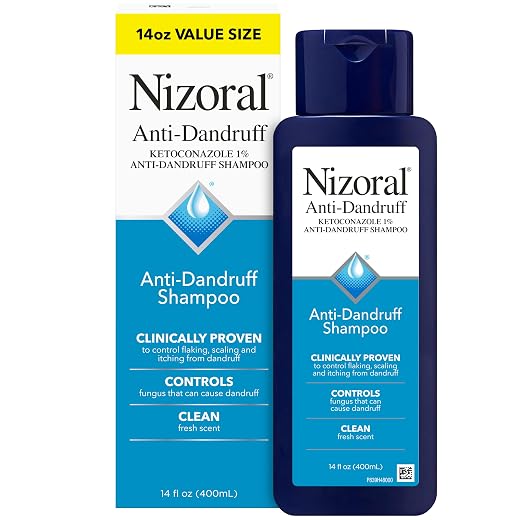
4. Nizoral Anti-Dandruff Shampoo with 1% Ketoconazole: Best for Stubborn Dandruff
Ordinary shampoo can wash away loose flakes. It may not address the main cause of recurring dandruff.
Nizoral contains a medicated antifungal ingredient. It is made for persistent flaking, itching, and dandruff that keeps returning.
Why It’s Worth It
Ketoconazole targets the fungus linked with dandruff, making Nizoral useful when ordinary shampoos fail. Twice-weekly use can calm stubborn flakes, itching, and scalp discomfort without needing daily medicated treatment overall.
Pros
- Contains 1% ketoconazole
- Targets dandruff-related fungus
- Used only a few times per week
- Suitable for stubborn flakes
- Can be alternated with regular shampoo
- Available without a prescription in the United States
Cons
- May dry the hair or scalp
- Not intended as an everyday beauty shampoo
- Requires a short contact period before rinsing
- Fragrance may bother sensitive users
- Not a replacement for medical care when symptoms are severe
Key Ingredients
The active ingredient is ketoconazole 1%, an antifungal ingredient used to control dandruff symptoms. Nizoral identifies ketoconazole as the product’s main dandruff-fighting ingredient.
The product name provided mentions peppermint and tea tree scent. Packaging and formulas may vary between markets, so check the active ingredient and label before purchasing.
Who It’s For
Nizoral is best for adults dealing with stubborn dandruff, noticeable flakes, itching, or recurring scalp scaling that does not improve with ordinary shampoo.
A dermatologist should assess severe redness, open sores, sudden hair loss, thick plaques, pain, or symptoms that continue despite correct use.
How to Use
Wet the hair and scalp. Massage the shampoo directly onto the scalp and allow it to remain for the time stated on the label before rinsing thoroughly.
The brand recommends using Nizoral twice per week to control dandruff symptoms. Use your normal shampoo and conditioner on other wash days.
Nizoral Anti-Dandruff Shampoo with 1% Ketoconazole, Fresh Scent, 14 Fl Oz | Anti-Fungal Shampoo, Dandruff Shampoo for Dandruff Relief, Ketoconazole Shampoo,...
Read more: Nizoral Anti-Dandruff Shampoo with 1% Ketoconazole
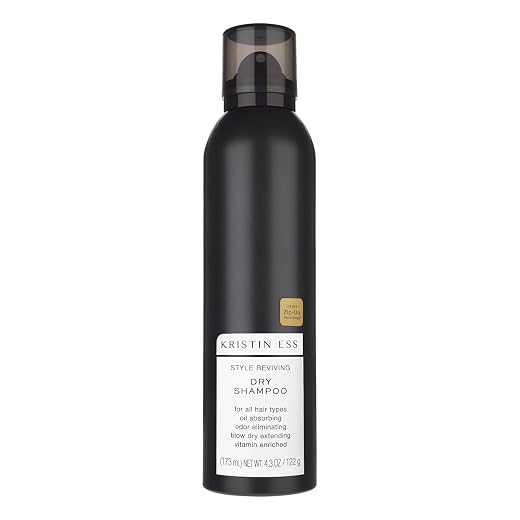
5. Kristin Ess Volumizing Vitamin C Dry Shampoo Spray: Best for Oily Roots Between Washes
Some mornings leave no time for washing, drying, and styling. Your roots still need help before work, school, or an event.
Kristin Ess Dry Shampoo absorbs oil and adds texture. It refreshes the appearance of hair without water.
Why It’s Worth It
This dry shampoo absorbs visible oil and adds quick root lift between wash days. The powdery spray works well for busy mornings, workouts, travel, and flat second-day hair emergencies overall.
Pros
- Absorbs oil around the roots
- Adds volume and texture
- Talc-free formula
- Suitable for different hair types
- Useful for extending a blowout
- Contains rice starch and a vitamin C derivative
Cons
- Not a replacement for washing
- May leave visible powder if overapplied
- Contains fragrance and drying alcohol
- Aerosol application requires ventilation
- Can contribute to buildup when used repeatedly
Key Ingredients
Rice starch absorbs oil and helps mattify the scalp. The formula also contains a vitamin C derivative, panthenol, pea protein, plant oils, glycerin, and fragrance.
Who It’s For
This product suits oily roots, fine hair, flat second-day hair, gym routines, travel, busy mornings, and people trying to extend time between washes.
It is less suitable for people with very dry scalps, fragrance sensitivity, respiratory sensitivity to aerosols, or heavy existing product buildup.
How to Use
Shake the can well. Divide dry hair into sections and spray lightly near the roots.
Allow the powder to sit briefly. Massage it into the hair with your fingertips until the visible residue disappears. Never apply it to wet hair.
Kristin Ess Volumizing Vitamin C Dry Shampoo Spray for Oily Hair + Frizz - Oil Absorbing Style Extender with Minimal Residue - Powder Spray - Sulfate Free +...
Read more: Kristin Ess Volumizing Vitamin C Dry Shampoo Spray
6. OGX Renewing Argan Oil of Morocco Shampoo: Best for Dry and Damaged Hair
Heat tools, rough brushing, sun exposure, and chemical treatments can leave hair looking dull. The ends may feel stiff even when the roots are clean.
OGX Argan Oil of Morocco combines cleansing with a more conditioning finish. It is designed for dry, damaged, and frizz-prone lengths.
Why It’s Worth It
Argan oil and conditioning agents help rough, dry hair feel smoother and look shinier. The creamy wash is especially useful when heat styling or weather leaves lengths dull and brittle.
Pros
- Designed for dry and damaged hair
- Contains argan oil
- Helps smooth rough strands
- Creamy texture
- Formulated without sulfated surfactants
- Works well for medium hair
- Helps improve shine and manageability
Cons
- May weigh down very fine hair
- Contains fragrance
- Contains amodimethicone
- May not clean very oily roots deeply enough
- Severely damaged hair will still require conditioner or treatment
Key Ingredients
The formula includes argan kernel oil, sodium methyl cocoyl taurate, decyl glucoside, cocamidopropyl betaine, amodimethicone, conditioning guar, and hydrogenated castor oil.
OGX states that the updated formula contains no sulfated surfactants, parabens, phthalates, microplastics, or dyes.
Who It’s For
Choose it for medium-textured, dry, rough, damaged, frizzy, or heat-styled hair. It can also work for people who want a sulfate-free cleansing base with a smoother finish.
Very fine or quickly greasing hair may find the formula too conditioning for frequent use.
How to Use
Apply the shampoo generously to wet hair. Massage it through the scalp and work the lather gently toward the ends.
Rinse completely and follow with conditioner. Avoid piling long hair on top of the head, since rough movement can increase tangling.
OGX Renewing + Argan Oil of Morocco Shampoo, Damage Repair Shampoo & Argan Oil to Help Strengthen & Repair Dry, Damaged Hair, Paraben-Free, Sulfate-Free...
Read more: OGX Renewing Argan Oil of Morocco Shampoo
7. Davines MINU Shampoo: Best for Color-Treated Hair
Hair color can lose its shine after repeated washing. Hard water, strong cleansers, UV exposure, and frequent shampooing may make the shade appear dull.
Davines MINU focuses on gentle cleansing and color vibrancy. It brings a salon-inspired option to this mixed drugstore and premium list.
Why It’s Worth It
MINU cleans color-treated hair gently while supporting shine and color vibrancy. Its formula feels more salon-like than basic drugstore shampoo, making it a thoughtful splurge for frequently dyed hair today.
Pros
- Designed for color-treated hair
- Gentle cleansing base
- Helps maintain shine
- Suitable for different hair textures
- Contains green coffee extract
- Helps remove dulling residues
- Rich, creamy texture
Cons
- More expensive than standard drugstore shampoo
- Contains fragrance
- Scent may feel strong to sensitive users
- Not specifically designed for dandruff or oily scalp
- Color protection works best with a complete routine
Key Ingredients
MINU contains green coffee seed extract, glycerin, inulin, acerola fruit extract, gentle surfactants, and conditioning ingredients.
Davines highlights caffeine, caffeic acid, and ferulic acid in its green coffee extract and positions the shampoo for color protection and shine.
Who It’s For
This shampoo is intended for dyed, highlighted, balayage, bleached, or chemically colored hair. It can be used on fine, straight, wavy, curly, or coarse textures.
People with fragrance sensitivity should review the ingredient list and scent profile before buying.
How to Use
Apply a small amount to wet hair. Massage it gently into the scalp and through the hair, then rinse thoroughly.
Repeat when necessary. Follow with a conditioner or mask designed for color-treated hair.
Davines MINU/Shampoo, Protective & Illuminating Cleanser for Color Treated Hair - Preserves Vibrancy & Shine with Green Coffee - Gentle Formula Keeps Color...
Read more: Davines MINU Shampoo For Smooth & Silky Hair
8. OUAI Anti-Dandruff Shampoo: Best for Flakes and Scalp Buildup
Dandruff shampoos often feel purely medicinal. Some leave the hair rough, dry, or strongly scented.
OUAI combines an active dandruff ingredient with a more cosmetic formula. It focuses on flakes, itching, irritation, and scalp buildup.
Why It’s Worth It
Two percent salicylic acid loosens flakes and clears scalp buildup while gentle cleansers wash hair. It suits people wanting dandruff care with a polished texture, fragrance, and distinctly premium feel.
Pros
- Contains 2% salicylic acid
- Helps loosen flakes and buildup
- Targets itching linked with dandruff
- Applied directly to the scalp
- Contains glycerin and conditioning agents
- SLS and SLES-free
- Leaves hair feeling clean and soft
Cons
- Premium price
- Contains fragrance
- Can dry sensitive scalps when overused
- Requires five minutes on the scalp
- May not work as well as ketoconazole for fungus-driven dandruff
Key Ingredients
The active ingredient is salicylic acid 2%. The inactive formula contains cocamidopropyl betaine, glycerin, sodium lauroyl methyl isethionate, willowherb extract, conditioning polymers, and fragrance.
Who It’s For
It works best for flaky scalps, visible buildup, mild dandruff, scalp itching, and people who prefer an exfoliating dandruff shampoo with a more luxurious feel.
Avoid using it on broken or severely irritated skin. Persistent or worsening symptoms should be discussed with a doctor or dermatologist.
How to Use
Wet your hair and apply the shampoo directly to the scalp. Massage until it forms a lather.
Leave it on for five minutes, rinse thoroughly, and follow with conditioner. OUAI recommends using it at least twice weekly or according to a doctor’s instructions.
Five Quick Shampoo Comparisons
Two shampoos can look similar while solving different problems. These direct comparisons make the choice easier.
Use them to decide which formula matches your scalp, hair condition, and weekly routine.
Vanicream vs Garnier Pure Clean
Both products offer a clean, lightweight finish. Their main difference is sensitivity versus stronger residue removal.
Choose Vanicream for a sensitive scalp, fragrance avoidance, or a minimal ingredient routine. Choose Garnier Pure Clean for oily hair, styling-product residue, and a fresher citrus-scented wash.
Nizoral vs OUAI Anti-Dandruff Shampoo
Both products control dandruff symptoms. They rely on different active ingredients and work in different ways.
Choose Nizoral for stubborn, recurring dandruff because it contains ketoconazole 1%. Choose OUAI when flakes and scalp buildup are your main concerns and you prefer salicylic acid exfoliation.
L’Oréal Hyaluron Plump vs OGX Argan Oil
Both shampoos help dry hair feel more manageable. One focuses on lightweight hydration, while the other offers a smoother and richer finish.
Choose L’Oréal Hyaluron Plump for dehydrated or fine hair that needs bounce. Choose OGX Argan Oil for medium-textured, frizzy, rough, or heat-damaged hair that needs smoothing.
Garnier Pure Clean vs Kristin Ess Dry Shampoo
These products help with oily roots, but they are used at different times. Garnier requires water, while Kristin Ess refreshes dry hair.
Choose Garnier Pure Clean for a proper scalp wash and residue removal. Choose Kristin Ess for quick oil absorption between wash days, after exercise, or before an unexpected event.
Davines MINU vs OGX Argan Oil
Both can make dry lengths feel smoother. Their main purposes are color maintenance and damage care.
Choose Davines MINU for dyed or highlighted hair when preserving color vibrancy is the priority. Choose OGX Argan Oil for untreated or colored hair mainly affected by dryness, roughness, frizz, and heat styling.
How to Choose the Best Drugstore Shampoo
The front label does not tell the whole story. Begin with the condition of your scalp.
Your lengths and ends matter too, but shampoo is mainly applied around the roots.
Start With Your Scalp Type
Your scalp determines how much cleansing you need. A dry scalp and an oily scalp should not follow identical routines.
Choose a purifying shampoo for oily roots and buildup. Pick a fragrance-free, gentle shampoo for a sensitive scalp. Use an approved anti-dandruff formula when flakes and itching keep returning.
Consider Your Hair Texture
Fine hair becomes flat when a formula is too rich. Coarse and curly hair may feel rough when cleansing is too strong.
Fine hair often benefits from lightweight hydration. Medium or coarse hair may handle argan oil, conditioning agents, and richer formulas more easily.
Check for Chemical Treatments
Bleach and permanent dye can make hair more porous. Strong or frequent washing may increase dryness and make color appear dull faster.
Look for color-safe shampoo, gentle surfactants, conditioning ingredients, and formulas designed for dyed hair. Always follow with conditioner.
Think About Your Styling Routine
Dry shampoo, hairspray, mousse, oils, serums, and heat protectants can build up. A regular shampoo may eventually struggle to remove every layer.
Use a purifying or clarifying shampoo when hair feels coated, sticky, unusually flat, or difficult to style. Do not deep-clean damaged hair more often than it can tolerate.
Read the Active Ingredient
Dandruff shampoos are not interchangeable. Their active ingredients address different parts of the problem.
Ketoconazole is an antifungal active. Salicylic acid helps loosen flakes and remove dead skin buildup. Follow the label carefully and avoid mixing several strong scalp treatments without professional advice.
Final Verdict: Best Drugstore Shampoo Products to Buy
The best drugstore shampoo should match a specific need. It should not be chosen only because the bottle looks attractive or the fragrance is popular.
Choose Vanicream Shampoo for sensitive scalp, Garnier Pure Clean for oily roots, L’Oréal Hyaluron Plump for dehydration, and Nizoral for stubborn dandruff.
Pick Kristin Ess Dry Shampoo for quick oil control, OGX Argan Oil for dry and damaged hair, Davines MINU for color care, and OUAI Anti-Dandruff Shampoo for salicylic acid scalp exfoliation.
Start with one main concern. Use the product consistently and correctly. Your shampoo shelf becomes much easier to manage when every bottle has a clear job.
Frequently Asked Questions
What is the best drugstore shampoo overall?
There is no single shampoo that works best for everyone. The strongest choice depends on your scalp and hair condition.
Vanicream is a reliable option for sensitive scalps. Garnier Pure Clean suits oily roots, L’Oréal Hyaluron Plump supports dehydrated hair, and Nizoral is designed for stubborn dandruff.
How often should I shampoo my hair?
Wash frequency depends on oil production, exercise, hair texture, climate, and styling products. Oily scalps may need more frequent washing.
Dry, curly, bleached, or coarse hair often benefits from fewer washes and more conditioning. Clean your scalp when it feels oily, uncomfortable, or coated rather than following a rigid schedule.
Is sulfate-free shampoo always better?
Sulfate-free does not automatically mean gentler or better. The complete formula matters more than one ingredient category.
Some sulfate-free shampoos still cleanse strongly. Some sulfate-containing formulas work well for oily hair and buildup. Choose according to your scalp, hair condition, and washing frequency
Which shampoo is best for dandruff?
Nizoral and OUAI target dandruff with different active ingredients. Nizoral uses ketoconazole, while OUAI uses salicylic acid.
Ketoconazole is useful for fungus-related dandruff. Salicylic acid helps loosen visible flakes and scalp buildup. Persistent symptoms should be assessed by a dermatologist.
Can dry shampoo replace regular shampoo?
Dry shampoo absorbs oil but does not properly wash away sweat, dead skin, pollution, and layers of styling products.
Use it between regular washes, not instead of them. Repeated application without shampooing can leave the scalp feeling coated or uncomfortable.
What shampoo is best for dry and damaged hair?
OGX Argan Oil of Morocco is the richer option on this list. It contains argan oil and conditioning agents for rough, frizz-prone lengths.
L’Oréal Hyaluron Plump is better for dehydrated hair that needs moisture without losing bounce. Severely damaged hair also needs conditioner, masks, reduced heat, and careful handling.
Should shampoo be applied to the ends?
Place most of the shampoo on your scalp and roots. That is where oil, sweat, skin cells, and buildup collect.
The foam that travels through the lengths during rinsing is usually enough. Scrubbing fragile ends directly may make them feel drier and more tangled.
References:
- American Academy of Dermatology (AAD) – Tips for Healthy Hair: https://www.aad.org/public/everyday-care/hair-scalp-care/hair/healthy-hair-tips
- Cleveland Clinic – How Often Should You Wash Your Hair?: https://newsroom.clevelandclinic.org/2025/01/24/how-often-should-you-wash-your-hair
- American Academy of Dermatology (AAD) – Everyday Hair Care: https://www.aad.org/public/everyday-care/hair-scalp-care/hair
- Cleveland Clinic – Finding the Best Shampoo for Hair Loss: https://health.clevelandclinic.org/shampoo-for-hair-loss
- American Academy of Dermatology (AAD) – Tressed to Impress: Tips for Keeping Your Mane Magnificent: https://www.aad.org/news/tressed-to-impress-hair-tips