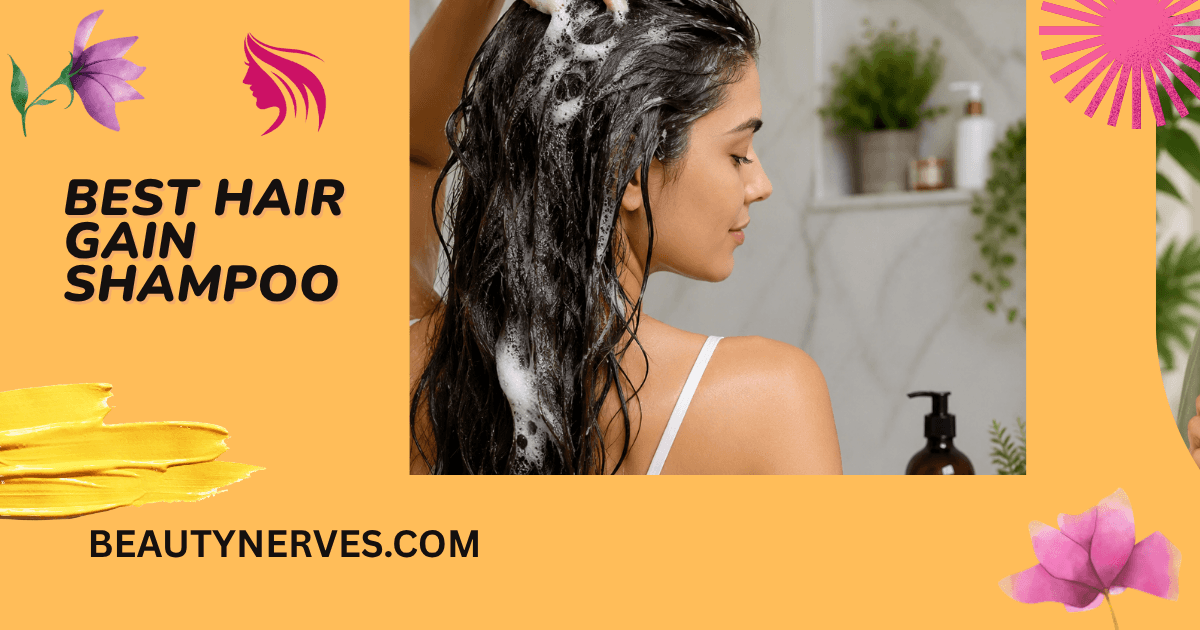
Your shampoo may clean your hair, yet still leave it flat, weak, and packed with buildup. That is why choosing the best hair gain shampoo matters.
The right formula cannot magically create new follicles, but it can reduce breakage, support a cleaner scalp, and make thin hair look fuller. Think of it as giving fragile strands better daily support.
Some shampoos add volume. Others protect color, remove residue, or strengthen damaged lengths.
Below, you will find eight popular options matched to hair needs, plus comparisons to help you choose without wasting money on promises that sound better than the results.
Disclosure: This post contains affiliate links. If you purchase through these links, I may earn a small commission at no extra cost to you.
Read more: Best Shampoos: The Complete Guide to Choosing the Right Shampoo for Every Hair Type




Read more: Haircare Products Guide: Top Ones to Make Your Hair Beautiful
What a Hair Gain Shampoo Can Really Do
A good shampoo supports the hair and scalp you already have.
It should not be confused with a medical treatment for hair loss.
Hair Growth vs. Fuller-Looking Hair
These two results sound similar, but they are not the same.
Knowing the difference protects you from unrealistic marketing claims.
Shampoo can remove buildup, reduce dryness, limit breakage, and make strands look thicker or more lifted. It does not create new hair follicles.
Cleveland Clinic notes that shampoos do not treat the underlying cause of most hair loss, while the American Academy of Dermatology recommends gentle cleansing and conditioning to reduce damage in fragile, thinning hair.
The phrase best hair gain shampoo is therefore most useful when it means a shampoo that supports scalp cleanliness, hair strength, visible volume, and length retention.
If you are losing hair suddenly, developing bald patches, or noticing scalp pain, speak with a dermatologist instead of relying only on cosmetics.
When the Right Shampoo Makes a Difference
A shampoo can still change how your hair behaves each day.
The best match depends on why your hair looks thin.
A volumizing shampoo helps fine, flat hair appear fuller. An anti-breakage shampoo helps damaged strands stay intact.
A clarifying shampoo removes oil, dry shampoo, and styling residue that can flatten roots. A color-safe shampoo protects dyed hair from looking dry and faded.
These improvements do not equal biological regrowth. However, they can make hair look denser, healthier, shinier, and easier to manage.
How These Shampoos Were Selected
The products below solve different causes of thin-looking hair.
The ranking considers formula purpose, hair type, and ease of use.
What We Looked For
No single ingredient works perfectly for every person.
A useful formula must match the condition of your scalp and strands.
The main factors were visible volume, breakage control, cleansing power, lightweight conditioning, color protection, and suitability for fine hair.
Ingredients such as biotin, collagen, rosemary, apple cider vinegar, oat, aloe, niacinamide, vitamin C, mint, and plant oils were considered according to their role in each complete formula, not as miracle ingredients.
Best Products for Hair Gain, Volume, and Strength
Each shampoo below is best for a specific hair concern.
Use the labels to find the closest match for your routine.
1. OGX Thick & Full + Biotin & Collagen Volumizing Shampoo: Best Overall for Fine, Flat Hair
This is the strongest all-round pick for quick, visible volume.
It suits people who want fuller-looking hair without a complicated routine.
Why It’s Worth It
It gives fine, limp hair fast body without complicating your routine. Biotin, hydrolyzed collagen, and lightweight cleansers help strands feel fuller, smoother, and easier to style throughout the entire day.
Pros
- Adds body to fine, limp strands.
- Free from sulfated surfactants, parabens, phthalates, microplastics, and dyes.
- Smooths hair for easier styling.
Cons
- Creates temporary fullness, not permanent regrowth.
- Contains amodimethicone and fragrance.
Key Ingredients
Biotin, hydrolyzed collagen, starch-based texturizers, and amodimethicone help create body, texture, and smoothness. OGX lists the shampoo for fine hair.
Who It’s For
Choose it for fine, flat, soft hair that loses volume quickly. It is less suitable when severe scalp buildup or diagnosed hair loss is the main concern.
How To Use
Massage into wet roots and hair, lather, and rinse. Follow with a lightweight conditioner, keeping most of it below the ears if your roots flatten easily.
OGX Thick & Full + Biotin & Collagen Volumizing Shampoo, Nutrient-Infused Hair Shampoo with Vitamin B7 Biotin Gives Hair Volume & Body for 72+ Hours,...
Read more: OGX Thick & Full + Biotin & Collagen Volumizing Shampoo
2. Garnier Fructis Grow Strong Thickening Shampoo: Best for Fast Fullness Without Weigh-Down
This formula is made for fine hair that looks flat.
It adds visible body while keeping the finish relatively light.
Why It’s Worth It
It targets the main complaint behind thin-looking hair: flatness. The formula adds visible body, supports weak strands, and keeps fine hair from feeling coated, heavy, or difficult to manage daily.
Pros
- Designed for fine hair and visible fullness.
- Silicone-free formula.
- Budget-friendly and easy to find.
Cons
- The 72-hour claim applies to the complete system.
- Strong citrus fragrance may bother sensitive users.
Key Ingredients
Biotin, vitamin C, and blood orange extract are the featured ingredients. Garnier says the formula contains no silicones, parabens, phthalates, or DMDM hydantoin.
Who It’s For
It suits fine, low-density, or flat hair that becomes weighed down by rich formulas. Very dry curls may need a richer conditioner afterward.
How To Use
Massage into wet hair, lather, and rinse thoroughly. Follow with the matching conditioner and, when desired, the leave-in spray from the thickening system.
Garnier Fructis Grow Strong Thickening Shampoo for Fine Hair, Biotin-C, 33.8 Fl Oz, 1 Count (Packaging May Vary)
Read more: Garnier Fructis Grow Strong Thickening Shampoo: Stronger, Fuller Hair Every Wash
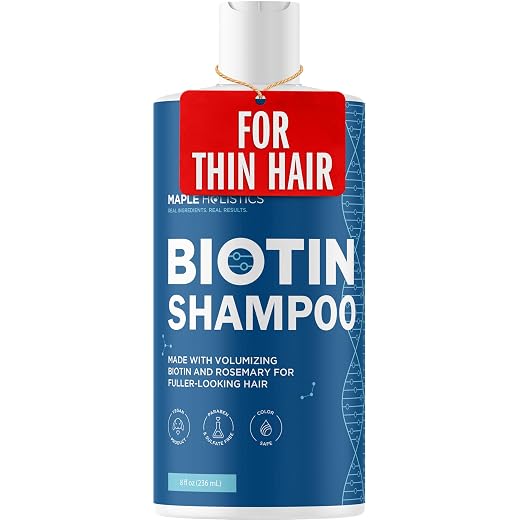
3. Maple Holistics Rosemary and Biotin Shampoo for Thinning Hair: Best Botanical, Sulfate-Free Option
This is the rosemary and biotin product from the supplied list.
It combines scalp-focused botanicals with conditioning oils.
Why It’s Worth It
It combines rosemary, biotin, tea tree, argan, coconut, and jojoba oils in a sulfate-free formula designed to support scalp care, moisture, strength, and fuller-looking hair with regular washing daily overall.
Pros
- Sulfate-free, paraben-free, and silicone-free.
- Includes several botanical oils.
- Can suit dry, weak, or frizz-prone hair.
Cons
- Essential oils may irritate a sensitive scalp.
- Oils may feel heavy on very fine, oily hair.
Key Ingredients
The formula highlights biotin, rosemary, zinc, panthenol, argan oil, coconut oil, jojoba oil, and tea tree oil. These mainly support cleansing, moisture, scalp feel, and conditioning.
Who It’s For
Choose it when you prefer sulfate-free hair care and want rosemary, biotin, and plant oils in one formula. Patch test first if essential oils cause reactions.
How To Use
Massage a small amount into wet scalp and hair, then rinse completely. Begin with two or three weekly washes and adjust according to oiliness, dryness, and scalp comfort.
Rosemary and Biotin Shampoo for Thinning Hair - Vegan Volumizing Shampoo for Fine Hair with B Vitamins Argan Oil & Tea Tree Essential Oil - Paraben Silicone...
Read more: Maple Holistics Rosemary and Biotin Shampoo for Thinning Hair
4. Garnier Fructis Grow Strong Shampoo: Best for Breakage-Prone, Damaged Hair
This shampoo focuses on strength rather than dramatic root lift.
It helps fragile hair retain length by reducing breakage.
Why It’s Worth It
It focuses on keeping the hair you already have from snapping. The anti-breakage formula smooths fragile strands, improves manageability, and helps damaged lengths look healthier, stronger, and more polished daily.
Pros
- Targets fragile, stressed, and damaged hair.
- Smooths and detangles.
- Suitable for all hair types.
Cons
- Not the strongest option for root volume.
- Best breakage results require the complete system.
Key Ingredients
Apple extract, niacinamide, ceramides, and vitamin B6 support the anti-breakage formula. Garnier states that the shampoo does not directly stimulate hair growth.
Who It’s For
Pick it when heat, brushing, coloring, or dryness causes snapping and split ends. It is particularly useful when broken lengths make hair look thinner.
How To Use
Massage through wet roots and lengths without rough scrubbing. Rinse and follow with conditioner. Garnier says it is gentle enough for daily use, though wash frequency should match your hair type.
Garnier Fructis Grow Strong Shampoo, 33.8 Fl Oz, 1 Count (Packaging May Vary)
Read more: Read more: Garnier Fructis Grow Strong Shampoo
5. Aveeno Apple Cider Vinegar Clarify & Shine Shampoo: Best for Oily, Dull Hair
Oil and residue can make roots look flat and separated.
This lightweight cleanser helps restore movement and shine.
Why It’s Worth It
It clears oil and dull residue while keeping the formula light. Oat and apple cider vinegar make it useful when greasy roots, flat strands, and lost shine appear together often.
Pros
- Good for oily, dull hair.
- Sulfate-free, dye-free, and paraben-free.
- Oat helps support a softer scalp feel.
Cons
- May not moisturize very dry hair enough.
- Clarifying use can roughen damaged ends without conditioner.
Key Ingredients
Apple cider vinegar forms the clarifying blend, while oat is the first featured ingredient. Aveeno positions the formula for dull hair and added shine.
Who It’s For
Choose it for greasy roots, dull strands, mild buildup, or hair that loses bounce quickly. Very dry scalps should alternate it with a moisturizing shampoo for dry one.
How To Use
Massage into wet roots with your fingertips, then rinse well. Apply conditioner from mid-length to ends. Start once or twice weekly if your hair is dry.
Aveeno Apple Cider Vinegar Clarifying Shampoo, Shine Enhancing, 12 fl oz
Read more: Aveeno Apple Cider Vinegar Clarify & Shine Shampoo
6. Garnier Fructis Pure Clean Purifying Shampoo: Best for Product Buildup
Styling residue can make clean hair look greasy and thin.
This formula works as a lightweight reset for frequent product users.
Why It’s Worth It
It is a practical reset for hair loaded with dry shampoo, styling cream, oil, or environmental grime. The lightweight formula cleans deeply without leaving fine strands heavy or coated afterward.
Pros
- Removes dirt, impurities, and styling buildup.
- Silicone-free.
- Suitable for all hair types, including oily hair.
Cons
- May dry porous or bleached ends.
- It is purifying, not a medicated hair-loss shampoo.
Key Ingredients
Aloe leaf juice, citrus peel extract, niacinamide, and vitamin B6 are featured. Garnier says the system removes residue and buildup without silicones, parabens, phthalates, or DMDM hydantoin.
Who It’s For
Pick it if you regularly use gel, oils, dry shampoo, leave-in cream, or hairspray. Dry, curly, or color-damaged hair may need less frequent use.
How To Use
Massage into wet scalp, lather, and rinse thoroughly. Follow with conditioner. Although Garnier calls it gentle enough for everyday use, wash according to your scalp’s needs.
Garnier Fructis Pure Clean Purifying Shampoo, Silicone-Free, 12.5 Fl Oz, 3 Count (Packaging May Vary)
Read more: Garnier Fructis Pure Clean Purifying Shampoo
7. Garnier Fructis Color Shield Shampoo: Best for Color-Treated Hair
Dyed hair can look thinner when fading and dryness reduce shine.
This shampoo prioritizes vibrancy instead of dramatic volume.
Why It’s Worth It
It protects the appearance of dyed hair while cleansing away daily dirt. Acai berry extract and UV filters help color look fresher, shinier, and less faded between salon appointments longer.
Pros
- Made for color-treated hair.
- Helps resist fading and dryness.
- Uses acai berry extract and UV filters.
Cons
- Not the strongest volumizing choice.
- The eight-week claim requires the matching conditioner.
Key Ingredients
Acai berry extract and UV filters are the main features. The complete list also includes niacinamide, grape-seed oil, green-tea extract, rosemary extract, and sunflower oil.
Who It’s For
It suits dyed, highlighted, or salon-colored hair that needs cleansing while preserving a fresh, shiny appearance. Choose another formula if maximum root lift matters more.
How To Use
Massage into wet hair, lather, and rinse. Follow with Color Shield Conditioner and use lukewarm water to reduce unnecessary dryness.
Garnier Fructis Color Shield Shampoo, Fortifying Shampoo for Color Treated Hair, Works on All Types and Shades of Hair, Vegan and Paraben Free, 12.5 fl. oz....
Read more: Garnier Fructis Color Shield Shampoo
8. Acure Vivacious Volume Shampoo: Best Vegan Option for Lifeless Roots
This lightweight formula targets fine, flat, lifeless hair.
It offers a plant-heavy ingredient list without sulfates or parabens.
Why It’s Worth It
It gives fine, lifeless roots a cleaner, bouncier feel through a lightweight vegan formula. Mint and echinacea add freshness, while gentle cleansers remove oil without creating heavy residue each day.
Pros
- Adds lift and body to flat roots.
- Vegan, cruelty-free, sulfate-free, and paraben-free.
- Lightweight formula.
Cons
- Peppermint oils may irritate sensitive scalps.
- The 8-ounce tube is relatively small.
Key Ingredients
Mint and echinacea are the hero ingredients. Aloe, glycerin, argan oil, rosemary oil, pumpkin-seed oil, quinoa, chamomile, calendula, and moringa also appear in the formula.
Who It’s For
Choose it for vegan, plant-focused volume on fine or flat hair. Avoid it when mint, fragrance, or essential oils commonly irritate your scalp.
How To Use
Massage into wet hair and scalp, then rinse thoroughly. Follow with a lightweight conditioner on the ends when needed.
Acure Vivacious Volume Shampoo - Volumizing for Fine Hair, Vegan - 8 fl oz | Volumizing Shampoo to Add Body and Thicken Thinning Hair for Women & Men,...
Read more: Acure Vivacious Volume Shampoo
Five Useful Product Comparisons
Several products solve similar problems in different ways.
These quick comparisons make the final choice easier.
OGX Biotin & Collagen vs. Garnier Grow Strong Thickening
Both aim to make fine hair look fuller.
The difference is how they create the finished feel.
OGX uses biotin, collagen, starch-based texturizers, and a smoothing silicone for a plumper, polished result. Garnier uses biotin, vitamin C, and blood orange in a silicone-free formula that may feel lighter.
Choose OGX for fuller, smoother styling. Choose Garnier when you want body with less coating.
Aveeno Apple Cider Vinegar vs. Garnier Pure Clean
Both remove residue that can flatten the roots.
Aveeno is more shine-focused, while Garnier is more buildup-focused.
Aveeno suits oily, dull hair that needs a lightweight, sulfate-free wash with oat. Pure Clean suits people who use styling products and want a silicone-free purifying shampoo with aloe and B vitamins.
Dry hair should use either product less often and follow with conditioner.
Garnier Grow Strong vs. Grow Strong Thickening
Their names are similar, but their main purposes differ.
One fights breakage, while the other creates visible fullness.
Choose regular Grow Strong for fragile, damaged strands that snap easily. Choose Grow Strong Thickening for fine hair that sits flat at the root.
Someone with both problems could use the strengthening formula most washes and the thickening formula before events or volume-focused styling.
Maple Holistics Rosemary and Biotin vs. Acure Vivacious Volume
Both use botanical ingredients and avoid sulfates.
Their texture goals, however, are not identical.
Maple Holistics is the richer option because it combines several oils with rosemary, biotin, tea tree, and panthenol. Acure is more focused on clean lift and bouncy roots with mint and echinacea.
Choose Maple for dry weakness. Choose Acure for light volume.
Garnier Color Shield vs. OGX Biotin & Collagen
These shampoos serve two very different priorities.
One protects color, while the other emphasizes visible thickness.
Choose Color Shield when dyed hair is fading, drying out, or losing shine. Choose OGX when natural or color-treated fine hair mainly needs body.
When both concerns matter, use a color-safe volumizing routine and watch for buildup from styling products or silicones.
How to Choose the Best Hair Gain Shampoo
Start with the problem you see and feel most often.
The ingredient list matters, but the product’s main job matters more.
For Fine and Flat Hair
Look for words such as volumizing, thickening, lightweight, body, and lift.
Avoid very rich formulas that leave your roots oily soon after washing.
OGX Thick & Full, Garnier Grow Strong Thickening, and Acure Vivacious Volume are the best matches here.
Use conditioner mainly on the ends. Blow-dry with low or medium heat and lift at the roots rather than pulling aggressively with a brush.
For Breakage and Damaged Lengths
Hair that breaks may appear as though it is not growing.
Protecting the strand can help you retain more visible length.
Choose Garnier Grow Strong when snapping, roughness, split ends, or heat damage are your main concerns. Use a conditioner after every wash, detangle gently, and reduce high heat.
The AAD recommends gentle shampoo, moisturizing conditioner, leave-in conditioner, and lower-trauma drying for thinning or fragile hair.
For Oily Roots and Buildup
Oil and styling residue can separate strands and expose more scalp.
A cleaner root area often makes hair look lighter and fuller.
Aveeno Apple Cider Vinegar is a good choice for oily dullness. Garnier Pure Clean is better for frequent styling-product buildup.
Do not over-clarify. If the scalp starts feeling tight, itchy, or flaky, reduce the frequency and switch some washes to a gentler moisturizing shampoo.
Final Verdict: Best Hair Gain Shampoo Products to Try
The best choice is the shampoo that matches your main hair problem.
Do not buy only because the bottle uses the words growth or thickening.
For most people with fine, flat hair, OGX Thick & Full + Biotin & Collagen Volumizing Shampoo is the best overall option because it gives fast visible body and is easy to use.
Choose Garnier Grow Strong Thickening for a lighter, silicone-free fullness effect. Pick Garnier Grow Strong when breakage is the main issue, Aveeno Apple Cider Vinegar for oily dull roots, and Garnier Pure Clean for styling buildup.
The best hair gain shampoo can improve how full, strong, clean, and healthy your hair looks. It cannot replace a proper diagnosis when true hair loss is occurring.
Frequently Asked Questions
Can Shampoo Regrow Thinning Hair?
Most cosmetic shampoos cannot treat the underlying cause of hair loss.
They mainly improve cleansing, strength, smoothness, and visible fullness.
Proven treatment depends on the diagnosis. The AAD lists topical minoxidil as an evidence-based option for some forms of early hair loss, but it cannot restore every lost hair and must be used correctly and consistently.
Speak with a dermatologist before starting treatment, especially when shedding is sudden or severe.
Is Biotin Shampoo Good for Hair Growth?
Biotin shampoos may condition hair and support a fuller appearance.
They are not guaranteed to stimulate new growth through the scalp.
Biotin works best as part of a balanced formula rather than as a miracle label. OGX pairs it with collagen and texturizing ingredients, while Garnier pairs it with vitamin C and blood orange.
Results are mostly cosmetic, including body, smoothness, reduced breakage, and easier styling.
How Often Should I Wash Thinning Hair?
There is no perfect schedule for every scalp.
Wash often enough to control oil and buildup without causing dryness.
Oily, straight hair may need more frequent washing. Dry, curly, bleached, or tightly coiled hair usually needs less.
Focus shampoo on the scalp and let the rinse clean the lengths. Use conditioner after washing because fragile hair is more likely to break when it becomes rough and tangled.
When Should I See a Dermatologist?
Do not wait when hair loss changes quickly or looks unusual.
Early diagnosis can prevent wasted time and inappropriate products.
Seek medical advice for sudden shedding, round bald patches, scalp pain, redness, scarring, heavy flaking, or thinning that keeps progressing.
Hair loss can have genetic, hormonal, nutritional, inflammatory, medication-related, or stress-related causes. A shampoo cannot identify or correct all of them.
References:
- American Academy of Dermatology (AAD) – Hair Loss Resource Center: https://www.aad.org/public/diseases/hair-loss
- American Academy of Dermatology (AAD) – Hair Loss: Tips for Managing: https://www.aad.org/public/diseases/hair-loss/treatment/tips
- American Academy of Dermatology (AAD) – Tips for Healthy Hair: https://www.aad.org/public/everyday-care/hair-scalp-care/hair/healthy-hair-tips
- Cleveland Clinic – Shampoos for Hair Loss: Can They Help?: https://health.clevelandclinic.org/shampoo-for-hair-loss
- Cleveland Clinic – What Can You Do To Stop Your Hair From Thinning and Falling Out?: https://health.clevelandclinic.org/how-to-stop-hair-thinning-and-falling