You brush your hair. A few extra strands stay behind. Soon, you start looking for a natural fix. That’s when castor oil for hair shows up everywhere. Social media loves it. Friends recommend it. Beauty blogs call it a hair growth miracle.
But is castor oil really that effective?
The truth is more balanced. Castor oil is packed with ricinoleic acid, fatty acids, vitamin E, and antioxidants. These nutrients help moisturize the scalp, reduce dryness, and protect hair from breakage.
While research does not prove that castor oil directly speeds up hair growth, it can make hair look healthier, shinier, softer, and easier to manage.
Before you start adding it to your routine, it’s worth knowing what it can and can’t do. Understanding the facts will help you decide whether castor oil is the right choice for your hair.
Table of Contents
Quick Features Table
| Feature | Details |
|---|---|
| Product Type | Natural vegetable oil |
| Main Ingredient | Ricinoleic acid |
| Best For | Dry, damaged, frizzy, and thick hair |
| Helps With | Moisture, shine, breakage, scalp dryness |
| Hair Growth | No direct scientific proof |
| Use Frequency | 1–2 times per week |
| Apply To | Scalp (optional), mid-lengths, and ends |
| Suitable For | Most hair types with proper use |
Is Castor Oil Good for Hair?
Yes, castor oil can be good for hair when used correctly.
It has been used for centuries as a traditional beauty remedy because of its rich moisturizing properties. Castor oil contains ricinoleic acid, omega fatty acids, and antioxidants that help nourish the hair and scalp.
Although many people claim that castor oil dramatically increases hair growth, current scientific research does not confirm that it directly stimulates faster hair growth. Instead, its biggest benefits come from improving the condition of your scalp and hair strands.
When your hair stays hydrated and protected from breakage, it often looks healthier, shinier, thicker, and longer over time.
The key is to view castor oil as a conditioning treatment rather than a miracle hair-growth solution.
What Is Castor Oil?
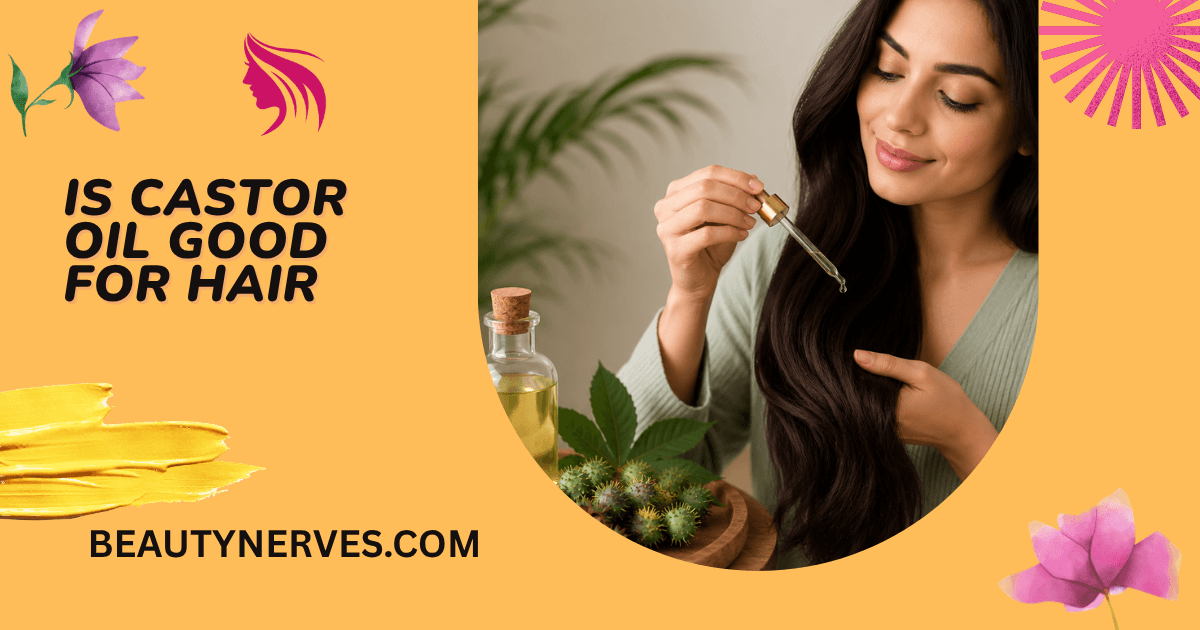
Castor oil is a thick vegetable oil extracted from the seeds of the Ricinus communis plant.
It has a pale yellow to amber color and a naturally thick consistency compared to most other hair oils. Because of its unique composition, it forms a protective layer around the hair shaft that helps reduce moisture loss.
Its primary active component is ricinoleic acid, a fatty acid that makes up nearly 90% of castor oil. This ingredient is responsible for many of its moisturizing and conditioning properties.
Castor oil also contains:
- Vitamin E
- Omega-6 fatty acids
- Omega-9 fatty acids
- Antioxidants
- Natural emollients
These nutrients help support healthier-looking hair while improving softness and shine.
Why Is Castor Oil Popular for Hair Care?
Castor oil has become one of the most popular natural hair oils because it addresses several common hair concerns.
People often use it to help with:
- Dry hair
- Frizzy hair
- Split ends
- Brittle strands
- Dry scalp
- Dull-looking hair
- Hair breakage
Its thick texture coats each strand, helping seal in moisture and reduce friction between hairs. This may lower breakage during brushing and styling.
Many people also enjoy using castor oil because it’s affordable, widely available, and easy to combine with other nourishing oils.
Benefits of Castor Oil for Hair
1. Deeply Moisturizes Dry Hair
One of the biggest advantages of castor oil is its ability to lock in moisture.
Dry hair often becomes rough, brittle, and difficult to manage. Applying castor oil creates a protective barrier that helps reduce water loss from the hair shaft.
With regular use, hair may feel:
- Softer
- Smoother
- More manageable
- Less dry
This is especially helpful for curly, coarse, and chemically treated hair that naturally loses moisture more quickly.
2. Helps Reduce Hair Breakage
Hair doesn’t always need to grow faster—it often needs to break less.
Dry, weak strands snap more easily during brushing, washing, and heat styling.
Because castor oil lubricates the hair shaft, it reduces friction between strands. Less friction means less mechanical damage.
Over time, reducing breakage allows you to retain more of your hair’s natural length.
3. Improves Hair Shine
Healthy hair reflects light better than dry hair.
Castor oil smooths the outer cuticle of each strand, making hair appear shinier and healthier.
Many people notice smoother-looking hair after just a few applications.
Unlike some styling products that create temporary shine with silicones, castor oil provides moisture while enhancing your hair’s natural appearance.
4. Helps Soothe a Dry Scalp
A dry scalp can lead to itching, tightness, and visible flakes.
Castor oil’s moisturizing properties may help reduce scalp dryness by creating a protective barrier that slows moisture loss.
Massaging a small amount into the scalp may leave it feeling more comfortable and hydrated.
However, if your scalp condition is caused by eczema, psoriasis, fungal infections, or another medical condition, it’s best to consult a dermatologist instead of relying solely on home remedies.
5. Makes Hair Look Fuller
Although castor oil doesn’t create new hair follicles, it can make existing hair appear thicker.
Its thick consistency coats each strand, increasing the appearance of volume.
This cosmetic effect can make fine or thin-looking hair seem fuller until the next wash.
6. Helps Control Frizz
Humidity often causes dry hair to become frizzy.
Castor oil helps smooth raised hair cuticles, making strands lie flatter.
As a result, hair may appear:
- Less frizzy
- Smoother
- Easier to style
- More polished
Using only a small amount is important, as too much can leave hair feeling greasy.
Does Castor Oil Help Hair Grow?
This is probably the most common question people ask.
The short answer:
There is currently no strong scientific evidence proving that castor oil directly increases hair growth.
Many online claims suggest that castor oil can dramatically speed up hair growth or regrow lost hair, but these claims are largely based on personal experiences rather than clinical studies.
That said, castor oil can indirectly support healthier hair by:
- Reducing breakage
- Improving scalp moisture
- Protecting hair from dryness
- Keeping strands conditioned
Because healthier hair breaks less often, many people feel their hair grows faster when, in reality, they are simply retaining more length.
This distinction is important when setting realistic expectations.
How to Use Castor Oil for Hair
Using castor oil correctly is important to avoid greasy buildup and get the best results. Since it is much thicker than most hair oils, a little goes a long way.
Step 1: Start with Clean or Slightly Damp Hair
You can apply castor oil to dry or slightly damp hair. If you’re using it as a scalp treatment, it’s best to apply it after washing your hair or when your scalp is free from heavy product buildup.
Clean hair allows the oil to spread more evenly.
Step 2: Warm the Oil Slightly
Castor oil is naturally thick, making it difficult to apply.
Place a small amount in a bowl and warm it slightly by placing the bowl in warm water for a few minutes. Avoid overheating the oil.
Slightly warm oil spreads more easily and feels more comfortable during application.
Step 3: Section Your Hair
Divide your hair into 4–6 sections.
Working in sections helps ensure even application without using excessive product.
Step 4: Massage into the Scalp (Optional)
If your goal is to moisturize your scalp, place a few drops directly onto your scalp.
Use your fingertips—not your nails—to gently massage for about 3–5 minutes.
A gentle massage may improve circulation and help distribute the oil evenly.
If your scalp is naturally oily, you can skip this step and apply the oil only to the hair lengths.
Step 5: Apply to the Mid-Lengths and Ends
Spread a small amount of castor oil through the middle and ends of your hair.
These areas usually experience the most dryness and breakage.
Avoid coating your hair with excessive oil, as it can become difficult to wash out.
Step 6: Leave It On
You can leave castor oil on your hair for:
| Treatment | Time |
|---|---|
| Quick treatment | 30–60 minutes |
| Deep conditioning | 2–4 hours |
| Overnight treatment | Only if comfortable and your scalp tolerates it |
If leaving it overnight, protect your pillow with a towel or wear a shower cap.
Step 7: Wash Thoroughly
Use a gentle shampoo to remove the oil.
Because castor oil is thick, you may need to shampoo twice.
Finish with your regular conditioner if needed.
After washing, your hair should feel soft and moisturized rather than greasy.
How Often Should You Use Castor Oil?
Using castor oil too often isn’t necessarily better.
The ideal frequency depends on your hair type and condition.
| Hair Type | Recommended Frequency |
|---|---|
| Dry hair | 2 times per week |
| Damaged hair | 2 times per week |
| Curly hair | 1–2 times weekly |
| Thick hair | 1–2 times weekly |
| Normal hair | Once weekly |
| Fine hair | Every 1–2 weeks |
| Oily hair | Every 2 weeks or as needed |
If your hair starts feeling heavy or greasy, reduce how often you use it.
Best Hair Types for Castor Oil
Castor oil works particularly well for people with hair that needs extra moisture.
It may be beneficial for:
- Dry hair
- Damaged hair
- Curly hair
- Coily hair
- Frizzy hair
- Color-treated hair
- Bleached hair
- Thick hair
People with very fine or oily hair can still use castor oil, but only in small amounts and mainly on the ends.
Who Should Be Careful When Using Castor Oil?
Although castor oil is generally safe for most people, it isn’t suitable for everyone.
You may want to use caution if you have:
- A very oily scalp
- Sensitive skin
- Allergies to castor beans or similar ingredients
- Scalp infections
- Certain skin conditions requiring medical treatment
Before your first use, perform a patch test by applying a small amount behind your ear or on your inner arm and waiting 24 hours.
If irritation develops, discontinue use.
Common Mistakes to Avoid
Using Too Much Oil
More isn’t always better.
Applying excessive castor oil can leave your hair greasy and difficult to wash.
A small amount is usually enough.
Expecting Overnight Hair Growth
Many social media videos claim castor oil grows hair extremely fast.
Scientific research does not support these claims.
Focus on healthier hair rather than unrealistic growth expectations.
Applying It Every Day
Daily use can cause buildup, especially on fine or oily hair.
One or two weekly treatments are enough for most people.
Skipping Shampoo
Leaving thick oil on the scalp for extended periods without washing may lead to buildup.
Always shampoo thoroughly after treatment.
Ignoring Allergic Reactions
Although uncommon, some people experience redness, itching, or irritation.
Stop using castor oil if any of these symptoms occur.
Expert Tips for Better Results
Want to get the most out of castor oil? Follow these simple tips:
- Warm the oil slightly before application.
- Use only a small amount.
- Massage gently instead of scratching your scalp.
- Focus on the mid-lengths and ends if your scalp is oily.
- Wash with a sulfate-free shampoo if possible.
- Be consistent—results take time.
- Minimize heat styling to reduce further damage.
- Pair castor oil with a balanced hair care routine.
Can You Mix Castor Oil with Other Oils?
Yes.
Because castor oil is very thick, many people prefer mixing it with lighter carrier oils.
Popular combinations include:
- Coconut oil for added moisture
- Argan oil for shine and softness
- Jojoba oil for a lightweight finish
- Olive oil for deep conditioning
- Sweet almond oil for smoother hair
Mixing oils can make castor oil easier to apply while providing additional conditioning benefits.
Side Effects and Risks of Castor Oil for Hair
Castor oil is generally safe for most people when used correctly, but it may not suit everyone. Like any hair care product, it can cause side effects if overused or applied to sensitive skin.
Possible side effects include:
- Greasy or heavy-looking hair
- Product buildup on the scalp
- Difficulty washing the oil out
- Scalp irritation or itching
- Allergic reactions (rare)
If you experience redness, burning, swelling, or persistent itching after using castor oil, stop using it and consult a healthcare professional.
To reduce the risk of irritation, always perform a patch test before applying castor oil for the first time.
Pros and Cons
| Pros | Cons |
|---|---|
| Deeply moisturizes dry hair | Very thick and sticky texture |
| Helps reduce hair breakage | Can be difficult to wash out |
| Improves shine | May weigh down fine hair |
| Helps smooth frizz | Can cause buildup if overused |
| Supports a healthier-looking scalp | No scientific proof that it directly speeds up hair growth |
| Affordable and widely available | May trigger irritation in sensitive individuals |
Best Practices Checklist
Follow these simple tips to get the best results from castor oil:
✅ Perform a patch test before first use.
✅ Apply a small amount rather than soaking your hair.
✅ Focus on the mid-lengths and ends if your scalp is oily.
✅ Massage gently using your fingertips.
✅ Leave the oil on for at least 30 minutes before washing.
✅ Shampoo thoroughly to remove residue.
✅ Use consistently once or twice a week.
✅ Combine castor oil with a healthy hair care routine for the best long-term results.
Key Takeaways
- Castor oil is an excellent natural moisturizer for dry and damaged hair.
- It helps reduce breakage, improve shine, and smooth frizz.
- There is no reliable scientific evidence that castor oil directly speeds up hair growth.
- Healthier, less brittle hair may appear longer over time because it breaks less.
- Use castor oil once or twice a week for most hair types.
- Applying too much can leave hair greasy and difficult to wash.
- A patch test is recommended before first use, especially if you have sensitive skin.
- Consistent use, along with a balanced hair care routine, provides the best results.
Conclusion:
So, is castor oil good for hair? For most people, the answer is yes.
While it isn’t a miracle solution for rapid hair growth, castor oil offers several proven cosmetic benefits. Its rich blend of ricinoleic acid, fatty acids, and antioxidants helps moisturize dry hair, improve softness, reduce frizz, enhance shine, and minimize breakage.
These benefits can make hair look healthier, fuller, and easier to manage over time.
The key is to have realistic expectations. Castor oil supports healthier-looking hair by improving moisture and reducing damage but it does not directly stimulate faster hair growth according to current scientific evidence.
For the best results, use castor oil in moderation, choose a routine that suits your hair type, and combine it with gentle cleansing, regular conditioning, a nutritious diet, and good overall hair care habits.
When used consistently, castor oil can become a valuable addition to your hair care routine and help maintain stronger, smoother, and healthier-looking hair.
Frequently Asked Questions
Is castor oil good for hair growth?
Castor oil can help create a healthier environment for your hair by moisturizing the scalp and reducing breakage. However, there is no strong scientific evidence that it directly makes hair grow faster.
Can I use castor oil every day?
Daily use is usually unnecessary.
Most people benefit from applying castor oil once or twice a week. Overusing it may lead to buildup and greasy hair.
Can castor oil make hair thicker?
Castor oil coats the hair shaft, making strands appear fuller and thicker temporarily. While it can improve the appearance of hair, it does not increase the number of hair follicles.
Is castor oil suitable for all hair types?
Yes, but the amount should be adjusted based on your hair type.
People with fine or oily hair should use only a small amount, while those with dry, curly, or thick hair may benefit from more frequent treatments.
Should I apply castor oil to my scalp?
You can, especially if you have a dry scalp.
However, if your scalp becomes oily easily, applying the oil mainly to the mid-lengths and ends may be a better option.
How long should I leave castor oil on my hair?
Most people leave it on for 30 minutes to 2 hours.
For a deeper conditioning treatment, you can leave it on overnight if your scalp tolerates it and you’re comfortable doing so.
Can I mix castor oil with coconut oil?
Yes.
Mixing castor oil with lighter oils such as coconut, argan, or jojoba oil makes it easier to apply and rinse out while providing additional moisturizing benefits.
Does castor oil help repair split ends?
No.
Castor oil can temporarily smooth and moisturize split ends, making them look healthier. However, it cannot permanently repair split ends. Trimming damaged ends is the only permanent solution.
References:
Pantene.com. WHY WE LOVE CASTOR OIL FOR HAIR CARE
medicalnewstoday.com. What to know about castor oil for hair