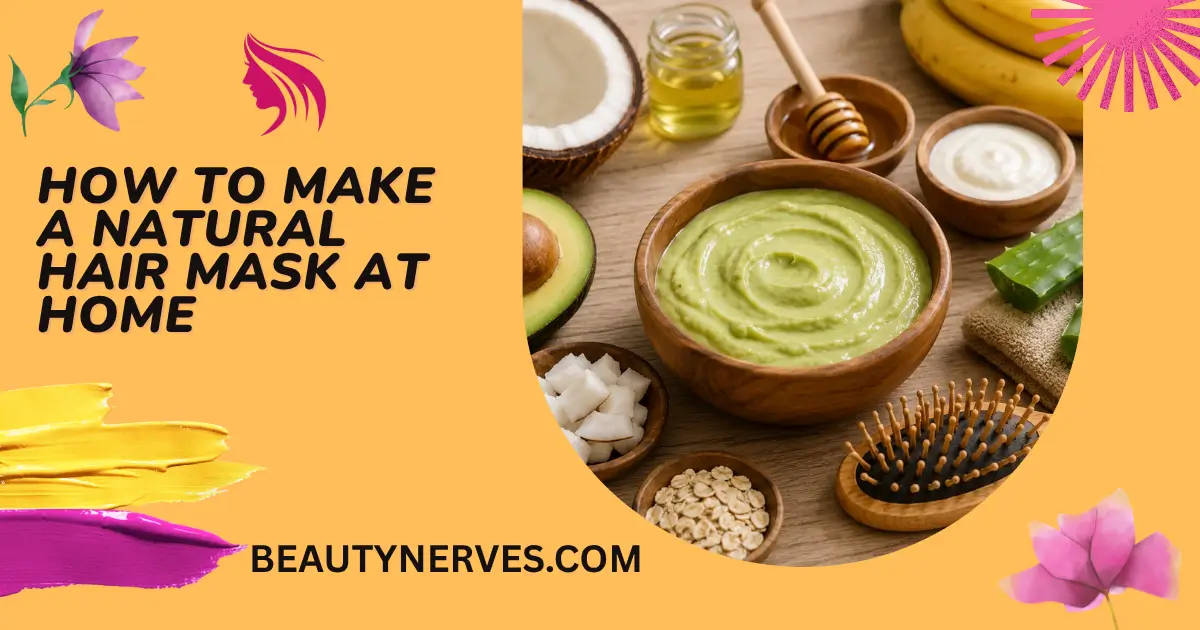
A natural hair mask is a deep-conditioning treatment made with ingredients commonly found in your kitchen or garden. If you’re learning how to make a natural hair mask, you’ll be pleased to know that most recipes use simple, nutrient-rich ingredients such as coconut oil, yogurt, honey, aloe vera, avocado, banana, and eggs.
Unlike many commercial hair products, natural hair masks typically contain fewer additives, making them a popular choice for people who prefer a more natural hair care routine.
A good natural hair mask helps moisturize your hair, reduce dryness, improve shine, strengthen strands, and make your hair softer, smoother, and easier to manage with regular use.
Table of Contents
TL;DR
- Natural hair masks nourish hair with simple ingredients.
- Choose ingredients based on your hair concerns.
- Leave the mask on for about 20–30 minutes.
- Use once or twice weekly.
- Always patch-test new ingredients before use.
Quick Reference Table
| Hair Concern | Best Ingredients | Benefits |
|---|---|---|
| Dry Hair | Coconut oil, honey, avocado | Deep moisture |
| Damaged Hair | Egg, yogurt, olive oil | Strengthens hair |
| Frizzy Hair | Banana, honey | Smooths hair |
| Oily Hair | Aloe vera, yogurt, lemon juice | Balances excess oil |
| Dull Hair | Aloe vera, honey | Adds shine |
Why Use a Natural Hair Mask?
Natural hair masks provide nutrients that help improve your hair’s appearance and condition.
Benefits include:
- Deep hydration
- Softer hair
- Improved shine
- Reduced frizz
- Stronger hair strands
- Better scalp nourishment
- Less breakage
- Easy detangling
While natural masks can improve hair condition, they cannot permanently repair split ends. Trimming damaged ends remains the most effective solution.
How to Make a Natural Hair Mask
1. Coconut Oil and Honey Hair Mask
Best for: Dry and frizzy hair
Ingredients
- 2 tablespoons coconut oil
- 1 tablespoon honey
Instructions
- Warm the coconut oil slightly.
- Mix with honey.
- Apply from mid-length to ends.
- Leave for 30 minutes.
- Shampoo and rinse.
Benefits:
- Locks in moisture
- Reduces dryness
- Makes hair softer
2. Avocado Hair Mask
Best for: Dry and damaged hair
Ingredients
- 1 ripe avocado
- 2 tablespoons olive oil
Instructions
- Mash the avocado until smooth.
- Mix in olive oil.
- Apply evenly.
- Leave for 25–30 minutes.
- Wash thoroughly.
Benefits:
- Rich in healthy fats
- Improves softness
- Reduces dryness
3. Egg and Yogurt Hair Mask
Best for: Weak and damaged hair
Ingredients
- 1 egg
- 3 tablespoons plain yogurt
Instructions
- Beat the egg.
- Mix with yogurt.
- Apply evenly.
- Leave for 20 minutes.
- Rinse with cool water before shampooing.
Benefits:
- Adds protein
- Improves strength
- Makes hair smoother
4. Aloe Vera Hair Mask
Best for: Oily scalp
Ingredients
- 4 tablespoons fresh aloe vera gel
- 1 tablespoon yogurt
Instructions
- Blend until smooth.
- Apply to scalp and hair.
- Leave for 20–30 minutes.
- Rinse thoroughly.
Benefits:
- Refreshes the scalp
- Helps control excess oil
- Adds moisture without heaviness
5. Banana Hair Mask
Best for: Frizzy hair
Ingredients
- 1 ripe banana
- 1 tablespoon honey
- 1 tablespoon olive oil
Instructions
- Blend all ingredients until smooth.
- Apply evenly.
- Leave for 30 minutes.
- Rinse and shampoo.
Benefits:
- Helps reduce frizz
- Softens hair
- Adds shine
How to Apply a Hair Mask
Follow these steps for the best results:
- Wash your hair lightly or dampen it.
- Divide your hair into sections.
- Apply the mask evenly.
- Massage your scalp gently if the mask is suitable for scalp use.
- Cover your hair with a shower cap or warm towel.
- Leave it on for 20–30 minutes.
- Rinse with lukewarm water.
- Shampoo if needed.
- Let your hair air dry whenever possible.
How Often Should You Use a Hair Mask?
| Hair Type | Frequency |
|---|---|
| Dry Hair | 2 times per week |
| Normal Hair | Once per week |
| Oily Hair | Every 10–14 days |
| Damaged Hair | 2 times per week |
| Curly Hair | Once or twice per week |
Expert Tips
- Use fresh ingredients.
- Blend ingredients thoroughly to avoid lumps.
- Apply evenly from roots to ends when appropriate.
- Don’t leave protein-based masks on for too long.
- Use lukewarm water instead of hot water.
- Store leftover mixtures only if they contain ingredients that keep safely refrigerated, and use them within 24 hours.
Common Mistakes
- Applying too much oil
- Using very hot water
- Skipping shampoo after oily masks
- Using unripe fruit
- Leaving the mask on for several hours
- Expecting instant results
- Using ingredients that trigger allergies
Troubleshooting
Hair Still Feels Dry
Try adding honey or avocado to your recipe.
Hair Looks Greasy
Use less oil and shampoo thoroughly.
Hair Feels Stiff
Reduce the frequency of protein-rich masks such as egg-based recipes and alternate with moisturizing masks.
Mask Is Hard to Wash Out
Blend ingredients well before applying and rinse thoroughly before shampooing.
Pros and Cons
| Pros | Cons |
|---|---|
| Affordable | Results vary by hair type |
| Natural ingredients | Some ingredients can be messy |
| Easy to prepare | Fresh masks don’t store well |
| Customizable | May require trial and error |
| Nourishing | Not a substitute for medical treatment of scalp conditions |
Best Ingredients by Hair Concern
| Hair Concern | Recommended Ingredients |
|---|---|
| Dry Hair | Coconut oil, avocado, honey |
| Frizz | Banana, honey |
| Weak Hair | Egg, yogurt |
| Oily Hair | Aloe vera, yogurt |
| Dull Hair | Honey, aloe vera |
Frequently Asked Questions
What is the best natural hair mask for dry hair?
A coconut oil and honey mask is one of the best choices because it helps moisturize dry strands and reduce frizz.
Can I use a natural hair mask every day?
No. Most people benefit from using a hair mask once or twice a week. Daily use may leave hair feeling heavy or greasy.
Should I apply a hair mask to wet or dry hair?
Slightly damp hair usually allows the mask to spread more evenly and absorb better than soaking wet hair.
Does a natural hair mask help hair growth?
A healthy scalp and well-conditioned hair may reduce breakage, helping hair retain length. However, no homemade hair mask is proven to dramatically increase hair growth on its own.
Can I leave a hair mask overnight?
It’s generally not necessary. Most homemade hair masks work well within 20–30 minutes. Leaving them on overnight may not provide additional benefits and can create a mess.
Why does my hair feel oily after using a hair mask?
You may have used too much oil or not shampooed thoroughly. Try reducing the amount of oil next time.
Key Takeaways
- Easy to make at home.
- Budget-friendly.
- Suitable for most hair types.
- Helps improve softness and shine.
- Can reduce dryness and frizz.
- Works best when used consistently.
Conclusion
Making a natural hair mask at home is an easy and affordable way to support healthy-looking hair. By choosing ingredients that match your hair type, applying the mask correctly, and using it consistently, you can improve softness, shine, and manageability.
Remember that natural hair masks work best as part of a regular hair care routine, alongside gentle cleansing, minimizing heat damage, and maintaining a balanced diet.