
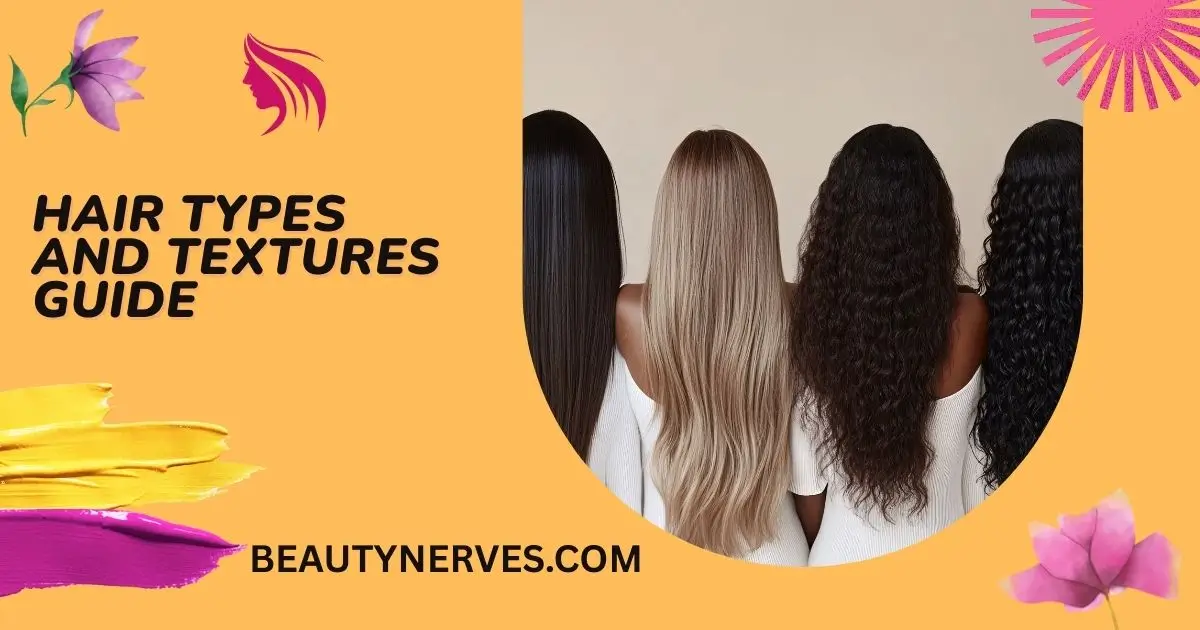
Are you confused about your hair type and how to care for it? Understanding your hair type can help you choose the right products and styling methods, ensuring your hair stays healthy and vibrant.
Whether you have straight, wavy, curly, or coily hair, the right care routine is crucial. In this guide, we’ll break down hair types and textures, offering practical tips for every texture.
Read More: Hair Care Guide: Strengthen Your Hair
Table of Contents
How I Helped a Client with Hair Textures
A client struggled with their 4B curls, battling frizz and dryness. After identifying their hair type and recommending proper moisturizing products, their curls became more defined, manageable, and healthy. It was a game-changer, proving that understanding hair texture is key.
What Are Hair Types?
Hair types are classified into four categories: straight, wavy, curly, and coily. Each type varies in thickness, texture, and how it reacts to products.
Knowing your hair type is essential because it determines how your hair should be styled, what products to use, and the level of maintenance required. Let’s look at the different hair types and their key characteristics.
The Hair Type Classification System
Hair types range from 1A (straight) to 4C (coily). Here’s a quick breakdown:
- Type 1A: Straight and fine, lacking volume.
- Type 2A to 2C: Wavy with varying levels of definition.
- Type 3A to 3C: Curly, from loose curls to tighter, springy ones.
- Type 4A to 4C: Coily hair, ranging from soft coils to tightly coiled, kinky curls.
Why Understanding Your Hair Type Matters
By knowing your hair type, you can:
- Choose the right products.
- Implement an effective styling routine.
- Minimize damage from incorrect styling tools.
The Straight Hair Types: 1A to 1C
Straight hair types have little to no curl. They are typically smooth, sleek, and can appear shiny when properly cared for. However, the lack of volume can sometimes be a challenge.
1A – Ultra-Sleek and Fine
1A hair is extremely straight, fine, and tends to lack volume. This type is often sleek and shiny but may appear limp without the right products.
Styling Tips: Use volumizing mousse or lightweight texturizing spray to add body.
1B – More Body and Volume
1B hair is still straight but with more body and thickness compared to 1A.
Best Products: Use light, hydrating shampoos and texturizing sprays for subtle waves and volume.
Read More: 1B Hair: The Ultimate Guide to Color, Texture, and Styling
1C – Thick, But Straight
1C hair is thicker than 1A and 1B, offering more texture.
Care Tips: Apply smoothing serums to reduce frizz and add shine.
Read More: 1C Hair: The Ultimate Guide to Styling & Managing Your Hair
Wavy Hair Types: 2A to 2C
Wavy hair sits between straight and curly, often characterized by loose, soft waves. It can be prone to frizz and needs products to define and maintain texture.
2A – Fine and Flowing
2A waves are fine, soft, and often flow gently.
Styling Tips: Use a lightweight mousse or sea salt spray to enhance waves without weighing them down.
Read More: 2A Hair: Best Products, Tips & Styles for Gorgeous Waves
2B – Defined, Yet Frizz-Prone
2B hair has more pronounced waves and may frizz easily.
Care: Anti-frizz serums and leave-in conditioners work wonders for this type.
Read More: 2B Hair: Your Ultimate Guide to Frizz-Free Waves
2C – Thick, Defined Waves
2C hair is thick and wavy, with more volume and curl definition.
Best Products: Use smoothing gels to keep waves in place without frizz.
Read More: 2C Hair: The Ultimate Guide to Defining Your Curls
Curly Hair Types: 3A to 3C
Curly hair can range from loose, bouncy curls to tighter, more voluminous curls. This type of hair can be prone to dryness, so it’s crucial to use hydrating and curl-enhancing products.
3A – Loose, Bouncy Curls
3A curls are soft, large, and have a natural shine.
Styling Tips: Lightweight curl creams or gels are ideal to define curls without weighing them down.
3B – Medium, Springy Curls
3B curls are tighter than 3A curls but still soft and bouncy.
Care: Use curl creams that offer definition and moisture to prevent frizz.
Read More: 3B Hair: Embrace Defined, Bouncy Curls with Confidence
3C – Tight, Voluminous Curls
3C hair has tight curls with lots of volume.
Styling: Moisturizing curl creams and anti-humidity products will keep curls defined and hydrated.
Read More: 3C Hair: Ultimate Guide to Manage and Define Your Curls
Coily and Kinky Hair Types: 4A to 4C
Coily hair types are tightly curled or kinky. These textures are prone to shrinkage and dryness, but with the right care, they can thrive.
4A – Soft, Defined Curls
4A hair has soft, springy curls that form an “S” shape.
Care Tips: Cream-based products help lock in moisture and define curls.
Read More: 4A Hair: The Ultimate Guide to Healthy Curls and Styling
4B – Z-shaped Curls
4B curls have sharp angles and a zigzag pattern.
Styling Tips: Use heavy creams and oils to keep hair moisturized and manageable.
Read More: 4B Hair Care: Ultimate Guide to Healthy, Defined Curls
4C – Tightly Coiled, Kinky Hair
4C hair has tightly coiled, dense curls that shrink significantly when dry.
Best Products: Oils and deep conditioners are essential to maintaining moisture and curl definition.
Read More: 4C Hair: Ultimate Guide to Care, Growth, and Styling Tips
Hair Care Tips for Each Texture
Each hair type requires a unique care routine. By choosing the right products and following the correct hair care regimen, you can maintain healthy, beautiful hair.
Best Products for Straight Hair Types
For 1A-1C, look for products that add volume and reduce frizz without weighing the hair down. Lightweight mousse, texturizing sprays, and smoothing serums work best.
Wavy Hair Care Essentials
For 2A-2C, use lightweight moisturizers, anti-frizz products, and texturizing sprays to enhance waves without weighing them down.
Curly and Coily Hair Care
For 3A-4C hair, focus on hydration with curl creams, deep conditioners, oils, and anti-frizz products. These textures need moisture and protection from heat and environmental damage.
How to Style Different Hair Textures
Each hair type responds to different styling techniques. Here’s how to style your hair, based on texture.
Straight Hair Styling Tips
For straight hair, consider sleek and smooth styles or light waves. Use heat protection and volumizing products to add texture and fullness.
Wavy Hair Styling
To enhance waves, try scrunching hair with sea salt spray or using a curling iron for more defined waves.
Curly and Coily Hair Styles
For curly and coily hair, try styles like twist-outs or braid-outs to define curls. Use curl-enhancing products to maintain moisture and shape.
Chart: Hair Types and Their Characteristics
| Hair Type | Characteristics | Best Products |
|---|---|---|
| 1A | Fine, straight, smooth | Volumizing mousse, texturizing spray |
| 2A | Soft, fine waves | Sea salt spray, lightweight mousse |
| 3A | Loose, bouncy curls | Curl cream, lightweight gel |
| 4A | Soft, defined curls | Cream-based moisturizers |
| 4B | Tight, Z-shaped curls | Curl cream, oils |
Pro Tip
For coily hair types, always moisturize deeply and avoid heat as much as possible. Deep conditioning weekly helps keep curls healthy and hydrated.
Expert Quote
Understanding your hair texture helps you choose the right products, making styling easier and maintaining healthier hair.
– Alex Smith, Hair Care Specialist
Conclusion: Care for Your Hair, Choose the Right Routine
Understanding your hair type is the key to healthier, more manageable hair. By selecting the right products and styles for your texture, you ensure that your hair stays in top condition.
Whether you have straight, wavy, curly, or coily hair, tailor your routine to your type. Don’t be afraid to experiment with different products until you find what works best for you.
Identify your hair type today and start a care routine that works for you. Healthy, beautiful hair is within reach!
Key Takeaways
- Hair types range from straight to coily curls.
- Each texture requires specific care and styling methods.
- Products should be chosen based on your hair type for the best results.
- Embrace your natural texture to improve hair health.
FAQs
What are the main hair types?
Hair types are classified into four groups: straight (1), wavy (2), curly (3), and coily (4). Each requires different care.
How do I define my hair texture?
You can identify your hair texture by observing its natural pattern—whether it’s straight, wavy, curly, or coily. Look for definition and volume.
What products should I use for wavy hair?
For wavy hair, use lightweight products like mousse or sea salt spray to add texture and define waves without weighing them down.

