Review basis: This is a general tool-selection guide, not a ranked product test. It does not document testing of any named brush or styler.
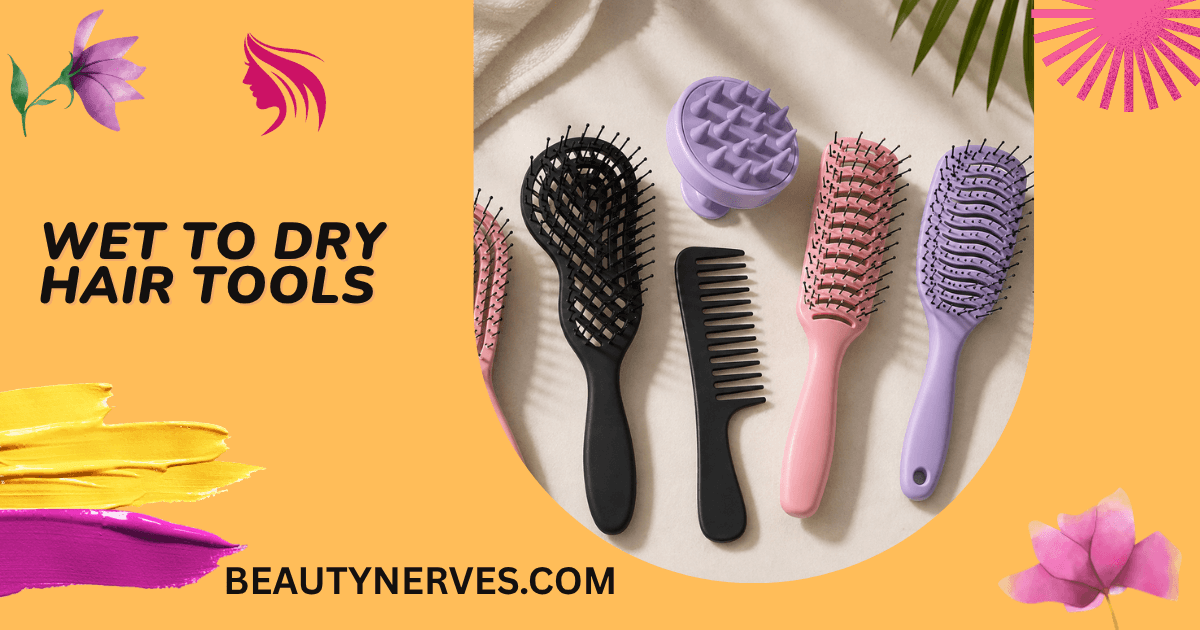
“Wet-to-dry” can describe different products: a wide-tooth comb, a detangling brush, or a heated device designed for damp hair. Their uses are not interchangeable. Check the specific tool’s manual and label; do not assume that a brush is safe for wet hair because of its product name or appearance.
Compare tools by purpose
| Tool type | Typical purpose | What to check |
|---|---|---|
| Wide-tooth comb | Separating and detangling sections | Tooth spacing, handle grip, and whether the shape suits your hair length and routine |
| Flexible detangling brush | Working through knots with less force | Pin flexibility, maker’s wet-use directions, and whether the brush catches or pulls |
| Brush designed for curls | Detangling or shaping sections of textured hair | Use instructions, section size, and whether the tool fits your damp-hair styling method |
| Heated or air-powered styler | Drying or shaping hair with heat and airflow | Whether the manufacturer permits damp use, heat settings, attachments, voltage, and safety features |
These categories are for comparison, not promises of performance. Device designs and instructions vary, including among products marketed as wet-to-dry stylers.
Choose based on your hair and routine
- For knots after washing: Consider fingers or a wide-tooth comb and work in small sections. Start near the ends and move upward without forcing through resistance.
- For curly or coily hair: AAD guidance recommends detangling wet hair with a suitable tool and conditioner or leave-in product, working in sections. Individual routines differ.
- For straight or wavy hair: AAD advises handling most wet hair as little as possible because it can break more easily. Let it dry somewhat before gentle combing when that suits your routine.
- For heat styling: Use only a device whose manual explicitly supports the hair condition you plan to style. Follow its temperature and distance instructions and limit unnecessary heat.
Use a brush or comb gently
Separate tangles gradually rather than pulling from the roots. Stop if the tool catches, hurts, or pulls out strands. Clean tools as directed by the maker, especially heated devices that must remain dry during cleaning. If hair loss, scalp irritation, or breakage continues, ask a dermatologist for individualized advice.
Common questions
Does “wet-to-dry” mean every brush can be used on wet hair?
No. Read the instructions for the exact product. A standard comb or detangling brush is different from a heated tool, and the product name alone does not establish safe use.
Should everyone brush wet hair?
No single rule fits every texture. AAD guidance generally recommends gentle handling of wet hair; for tightly curled or textured hair, detangling while wet can reduce breakage. Use a suitable tool and avoid tugging.
Sources
- American Academy of Dermatology: Hair styling without damage.
- American Academy of Dermatology: Curly hair care tips.