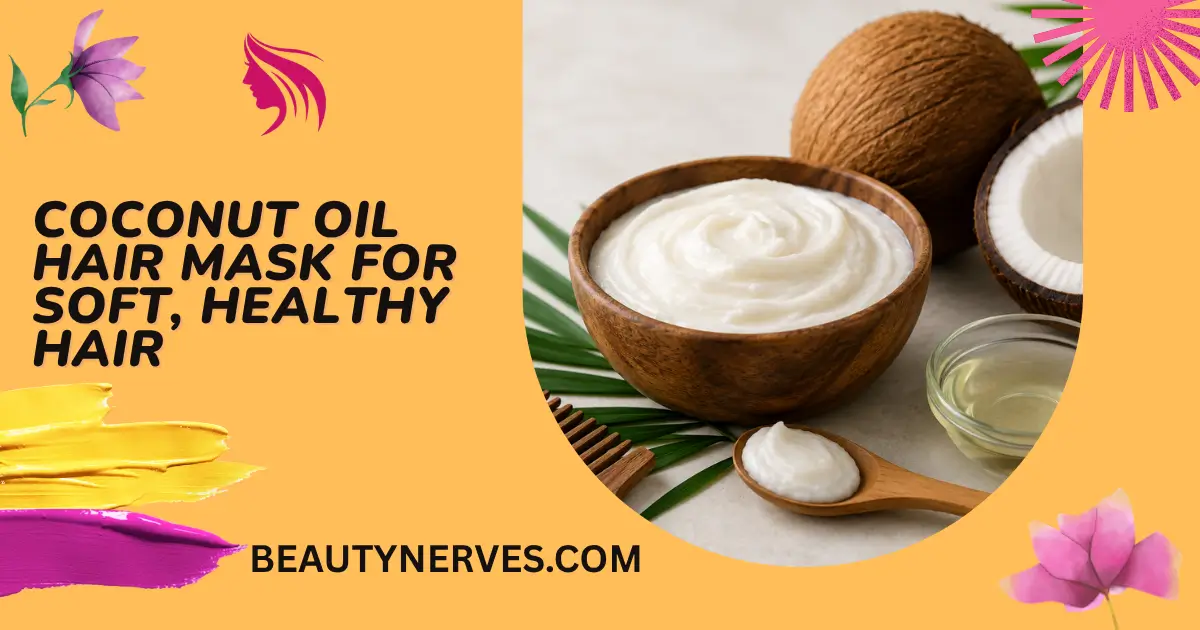
Dry, frizzy hair often needs more than a regular conditioner. A coconut oil hair mask is a simple treatment that helps restore moisture, improve softness, and leave hair looking healthier.
Made with coconut oil and other nourishing ingredients, it helps reduce protein loss, smooth the hair shaft, and add natural shine.
Whether your hair is dry, damaged, curly, or frizzy, a coconut oil hair mask can be an easy addition to your weekly hair care routine.
Table of Contents
TL;DR
- Coconut oil is rich in fatty acids that nourish hair.
- It helps reduce protein loss and breakage.
- Weekly use can improve softness and shine.
- DIY recipes are affordable and customizable.
- Coconut oil supports healthy hair growth by protecting existing hair; not by making hair grow faster.
- It works best for dry, damaged, or coarse hair.
- Fine or oily hair may need smaller amounts.
Key Takeaways
| Feature | Details |
|---|---|
| Best For | Dry, damaged, curly, and frizzy hair |
| Frequency | 1–2 times per week |
| Leave On | 20–60 minutes or overnight |
| Apply To | Damp or dry hair |
| Main Benefits | Moisture, shine, reduced breakage, softer hair |
| Difficulty | Easy |
| Cost | Low |
Coconut Oil Hair Mask Benefits
The biggest reason people love coconut oil is its ability to penetrate the hair shaft better than many other oils.
Some of the top coconut oil hair mask benefits include:
- Deep hydration
- Less protein loss
- Reduced split ends
- Improved softness
- Smoother hair texture
- Better shine
- Reduced frizz
- Easier detangling
- Protection from heat and environmental damage
- Healthier-looking scalp
Instead of simply coating the hair, coconut oil absorbs into the strands, making it one of the most effective natural hair conditioners.
Does a Coconut Oil Hair Mask Help Hair Growth?
Many people search for a coconut oil hair mask for hair growth, but it’s important to understand what it actually does.
Coconut oil doesn’t directly speed up hair growth.
Instead, it helps create healthier conditions by:
- Preventing hair breakage
- Reducing protein loss
- Moisturizing the scalp
- Protecting hair from damage
- Supporting stronger strands
When hair breaks less, it retains more length over time, making it appear to grow faster.
Coconut Oil Hair Mask DIY Recipes
Making your own coconut oil hair mask DIY treatment is simple and affordable.
1. Basic Coconut Oil Hair Mask
Ingredients:
- 2 tablespoons virgin coconut oil
Directions:
- Warm the oil slightly.
- Apply from mid-length to ends.
- Massage gently into the scalp if desired.
- Leave for 30 minutes.
- Shampoo twice.
Best for:
- Dry hair
- Frizzy hair
- Damaged hair
2. Coconut Oil and Honey Hair Mask
Ingredients:
- 2 tablespoons coconut oil
- 1 tablespoon honey
Benefits:
- Extra hydration
- Improved shine
- Softer hair
Leave on for 30–45 minutes before washing.
3. Coconut Oil and Aloe Vera Hair Mask
Ingredients:
- 2 tablespoons coconut oil
- 2 tablespoons aloe vera gel
Best for:
- Dry scalp
- Mild irritation
- Curly hair
4. Coconut Oil and Egg Hair Mask
Ingredients:
- 2 tablespoons coconut oil
- 1 egg
Benefits:
- Protein support
- Stronger hair
- Less breakage
Rinse with cool water to prevent the egg from cooking.
5. Coconut Oil and Avocado Hair Mask
Ingredients:
- Half a ripe avocado
- 2 tablespoons coconut oil
Great for:
- Severely damaged hair
- Chemically treated hair
- Thick curls
Coconut Oil Hair Mask: Wet or Dry Hair?
A common question is coconut oil hair mask wet or dry?
The answer depends on your goal.
Apply to Dry Hair
Best for:
- Deep conditioning
- Overnight treatments
- Very dry hair
Dry hair absorbs the oil gradually.
Apply to Damp Hair
Best for:
- Locking in moisture
- Curly hair
- Weekly maintenance
Damp hair helps seal hydration into the hair shaft.
For most people, lightly damp hair offers the best balance between absorption and easy application.
How Often Should You Use a Coconut Oil Hair Mask?
| Hair Type | Recommended Use |
|---|---|
| Dry hair | Twice weekly |
| Curly hair | Once or twice weekly |
| Damaged hair | Twice weekly |
| Normal hair | Weekly |
| Fine hair | Every 2–3 weeks |
| Oily hair | Every 2–3 weeks |
Avoid overusing coconut oil because too much can make hair feel heavy.
Step-by-Step Guide
- Brush your hair.
- Warm the coconut oil.
- Section your hair.
- Apply evenly.
- Massage your scalp.
- Cover with a shower cap.
- Wait 30–60 minutes.
- Shampoo thoroughly.
- Follow with conditioner if needed.
Common Mistakes
Avoid these mistakes:
- Using too much oil
- Skipping shampoo afterward
- Applying to dirty hair with heavy product buildup
- Leaving thick layers on fine hair
- Expecting instant hair growth
Small amounts usually work better.
Coconut Oil Hair Mask Before and After
Many users notice:
After one treatment:
- Softer texture
- Less frizz
- Better shine
After several weeks:
- Less breakage
- Easier styling
- Improved moisture retention
- Healthier-looking ends
Results vary depending on hair type and damage level.
Popular Coconut Oil Hair Masks
If you prefer ready-made products instead of DIY treatments, several popular options are available.
Coconut Oil Hair Mask OGX
The Coconut Oil Hair Mask OGX is known for its creamy formula that combines coconut oil with conditioning ingredients to improve softness and reduce frizz. It is a convenient option for people who want salon-style conditioning without mixing ingredients at home.
Coconut Oil Hair Mask Oliology
The Coconut Oil Hair Mask Oliology is designed to moisturize dry and damaged hair while helping improve shine and manageability. Many users choose it for color-treated or chemically processed hair because of its rich conditioning formula.
Coconut Oil Hair Mask Cocomagic
The Coconut Oil Hair Mask Cocomagic focuses on nourishing dry hair with coconut oil and botanical ingredients. It is commonly used as a weekly deep-conditioning treatment to restore softness and reduce dryness.
Expert Tips
- Use virgin, cold-pressed coconut oil.
- Warm it slightly before application.
- Focus on the mid-lengths and ends if your scalp is oily.
- Cover your hair with a shower cap to help the oil spread evenly.
- Wash with a gentle shampoo to remove residue without stripping moisture.
- Pair coconut oil with honey or aloe vera for added hydration.
Frequently Asked Questions
What is a coconut oil hair mask used for?
A coconut oil hair mask is used to moisturize dry hair, reduce breakage, improve shine, smooth frizz, and strengthen hair by minimizing protein loss.
Can I leave a coconut oil hair mask overnight?
Yes. Many people leave it on overnight, especially if they have very dry or damaged hair. Protect your pillow with a towel or shower cap, then shampoo thoroughly in the morning.
Is coconut oil good for all hair types?
Not always. It works best for thick, curly, coarse, or dry hair. People with fine or oily hair may prefer using smaller amounts or applying it only to the ends.
Should I apply coconut oil before or after shampooing?
For a hair mask, apply it before shampooing. This allows the oil to penetrate the hair before being washed out.
Can coconut oil repair split ends?
No. Split ends cannot be permanently repaired. Coconut oil can temporarily smooth and protect them, making hair look healthier until it is trimmed.
How long does it take to see results?
Many people notice softer and shinier hair after one treatment. Reduced breakage and healthier-looking hair generally become more noticeable after several weeks of consistent weekly use.
Benefits of Using a Coconut Oil Hair Mask
A coconut oil hair mask is one of the easiest and most affordable ways to nourish dry, damaged, or frizzy hair.
Whether you choose a simple coconut oil hair mask DIY recipe or a ready-made product like the Coconut Oil Hair Mask OGX, Coconut Oil Hair Mask Oliology, or Coconut Oil Hair Mask Cocomagic, regular use can improve softness, reduce breakage, and add healthy shine.
While coconut oil won’t magically speed up hair growth, it helps create stronger, healthier hair by minimizing damage and moisture loss. Used correctly and in moderation, it can be a valuable addition to almost any hair care routine.
References:
Healthline.com. The Benefits of a Coconut Oil Hair Mask and How to Make One.